The best conditions for paddle boarding are light wind (under about 8 mph), flat or gently rippled water, warm water, and clear skies with no storms in the forecast. That’s especially true for beginners. Calm mornings on a sheltered lake or bay are close to perfect.
Experienced paddlers go looking for different conditions depending on what they’re doing. SUP surfers want swell, downwinders want wind, and racers train in chop. But for most people, calm and warm is the goal.
Quick answer
- Wind: under about 7 knots (8 mph) for beginners. Avoid offshore wind (blowing from land out to sea or across a lake away from your launch).
- Water: flat, sheltered water. Avoid boat traffic and big wakes.
- Water temperature: warm enough that falling in is pleasant. Below 70°F, dress for cold water.
- Tides and current: paddle against the current first so it helps you home.
- Weather: no thunderstorms. If you hear thunder, get off the water.
- Light: daylight, with good visibility. Carry a light if you might be out near dark.
Calm water

Flat water is the best condition for almost every kind of paddling. It’s easier to balance, easier to go straight, and you’ll fall in far less. It’s also the only real option for paddle board yoga.
Look for sheltered spots: coves, small lakes, the lee side of a headland, or protected bays. Go early, before the wind gets up and the boat traffic arrives.
Wind
Wind is the condition that catches out most paddlers. When you stand up, your body works like a sail, and a 10–11 foot board catches a lot of wind too.
Glide’s wind guide gives sensible limits:
- Beginners: under about 7 knots (8 mph).
- Intermediate paddlers: about 8–12 knots (9–14 mph). Expect a tiring paddle into the wind.
- Advanced paddlers: up to about 15 knots (17 mph). Above that, conditions get hard and unsafe, especially on open water and big lakes.
Offshore wind is the dangerous one. It blows you away from shore and the water near the launch looks deceptively calm. British Canoeing advises SUP paddlers to avoid offshore winds altogether, and notes that in a moderate breeze a paddler can drift about a mile in half an hour.
Two simple habits help: paddle into the wind on the way out, so it pushes you home, and kneel if a gust hits. Check a wind forecast, not just the general weather.
Waves and swell
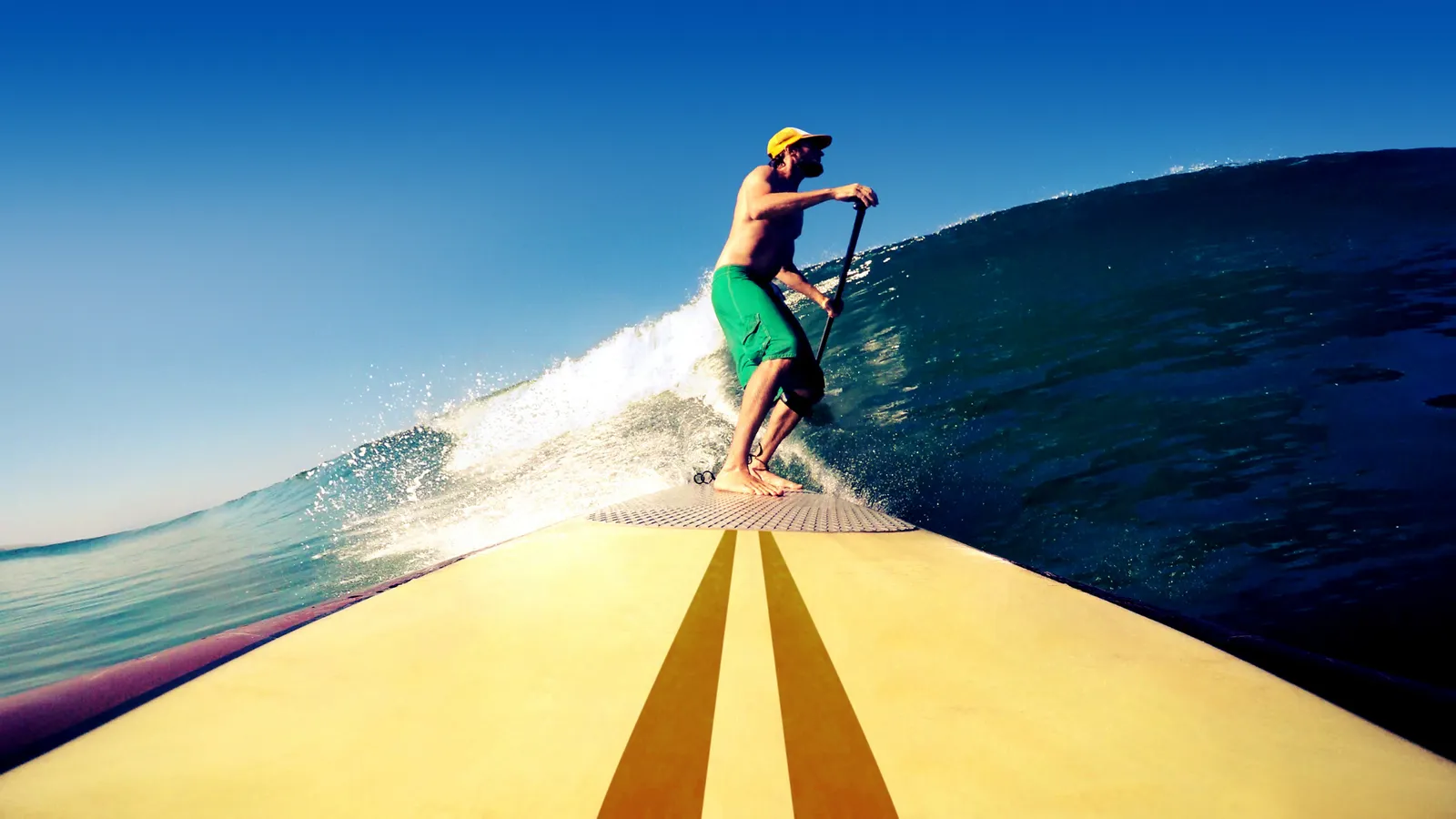
For SUP surfing you want swell and clean waves. For everything else, waves make life harder.
- Beginners: stay away from breaking waves. If you’re paddling in the ocean, launch in a sheltered spot and stay outside the surf zone.
- Learning to surf a SUP: start in small, gentle, spilling waves with few people around, on a board you can handle.
Our guides to paddle boarding in the ocean and catching a wave on a paddle board go further.
Currents and tides
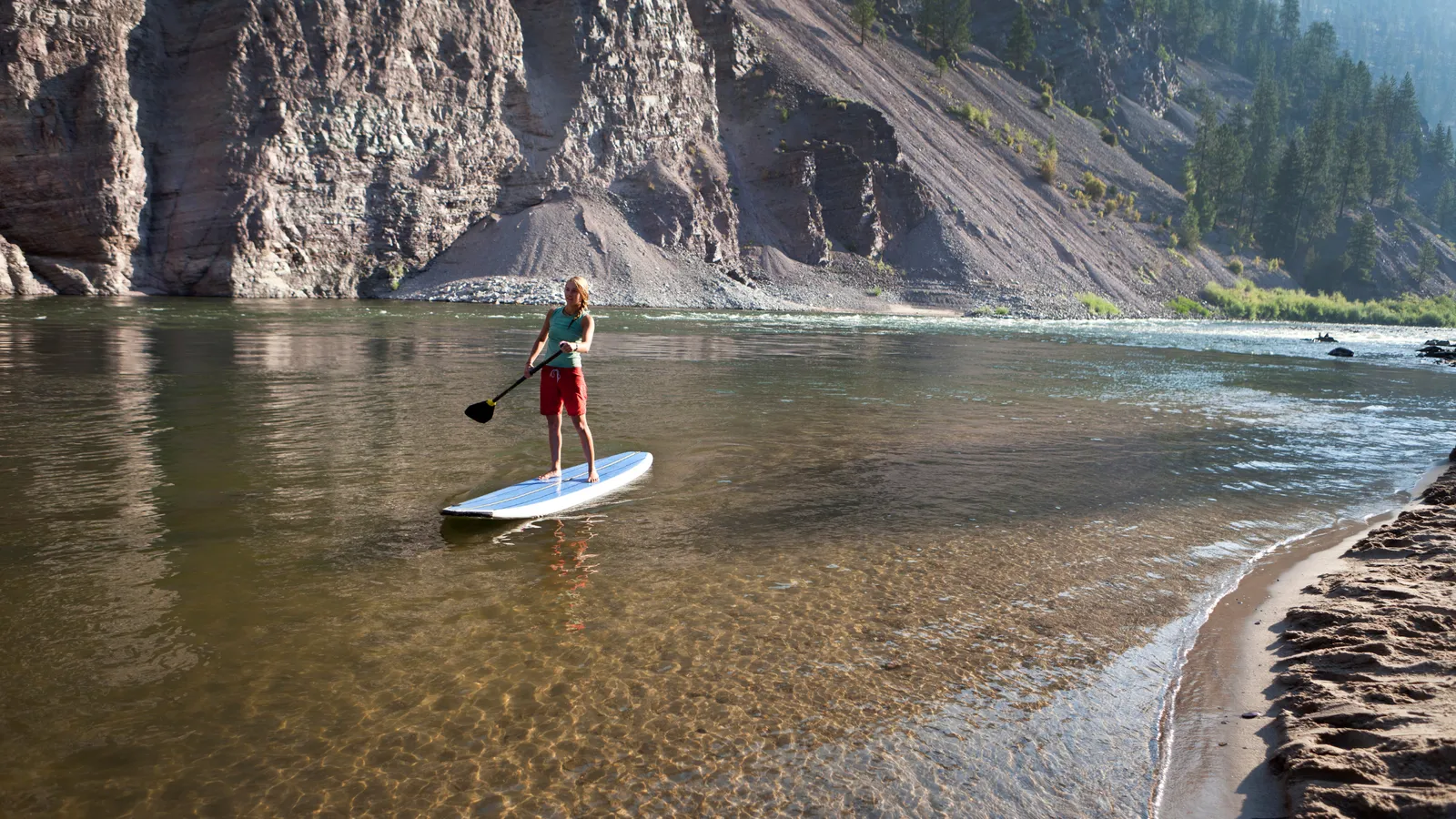
The surface doesn’t always show how strong a current is, especially on rivers and tidal inlets.
- Rivers: head upstream first, so the current helps you back. Wear a quick-release waist leash, not an ankle leash, in moving water.
- Tides: around high and low tide, the current is often slackest. Wind blowing against a tide makes steep, choppy water.
See our guide to the best tide for paddle boarding for more detail.
Water temperature
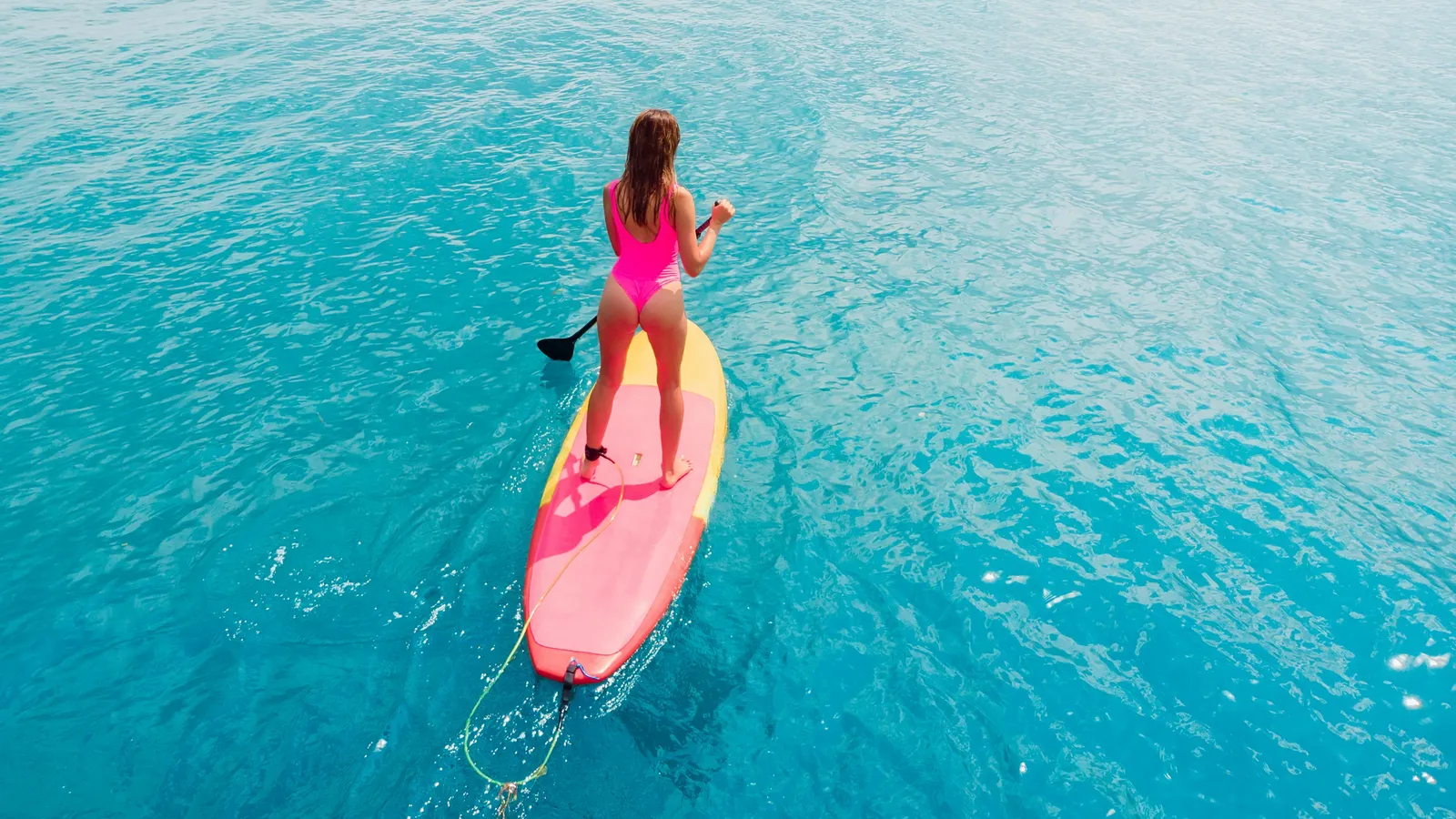
Dress for the water, not the air. A sunny 80°F day can sit on top of 55°F water.
Here’s how comfortable different water temperatures are, depending on how often you’re likely to fall in:
| Water temperature | Who it suits |
|---|---|
| 85°F and up | Beginners. You’ll fall in a lot, and it feels great. |
| 80–85°F | Intermediate paddlers who fall in now and then. |
| 70–80°F | Advanced paddlers who rarely fall. |
| 60–70°F | Experts paddling hard, in a wetsuit. |
| Below 60°F | Cold water. A proper wetsuit or drysuit for anyone. |
The safety line is higher than many people think. The National Center for Cold Water Safety treats any water below 70°F as cold and recommends thermal protection, because sudden immersion can trigger cold shock, which makes it hard to control your breathing. Our wetsuit check tells you what to wear for your water temperature.
Storms and lightning
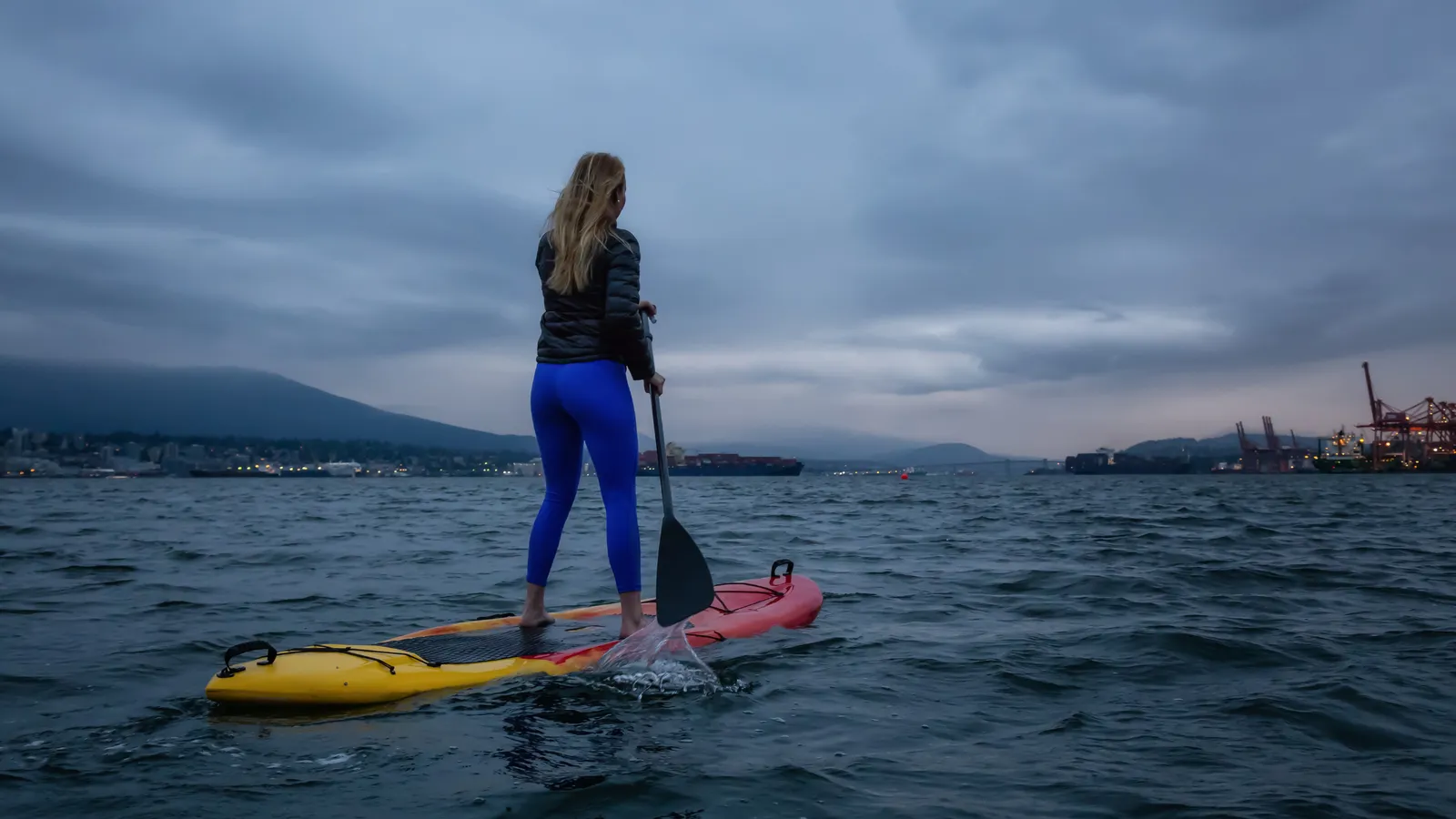
Thunderstorms are never good paddling conditions. On open water you’re the tallest thing around, and storms often bring sudden strong wind.
- Check the forecast before you go. If storms are forecast, change your plans.
- If you hear thunder, head for shore right away. The National Weather Service’s advice is that when thunder roars, go indoors, and wait 30 minutes after the last thunder before going back out.
- Rain alone is fine if it’s warm and there’s no lightning or wind.
Fog and darkness
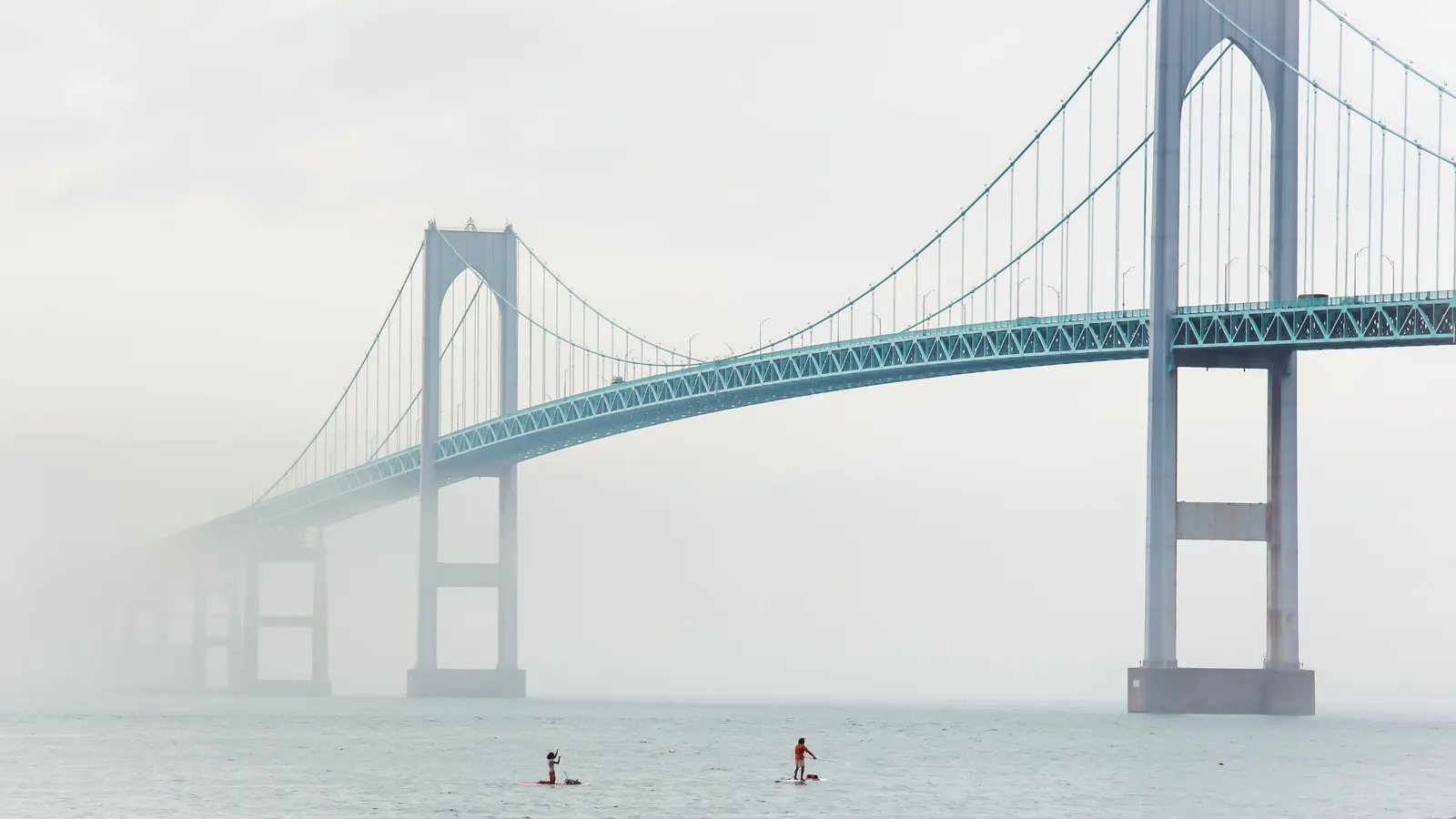
Fog and darkness make it hard for you to see, and much harder for boats to see you. If you might be out around dusk, the Coast Guard requires a light you can show to avoid a collision, and you should carry a whistle. In thick fog, stay close to shore or stay off the water.
Before you go: a quick checklist
- Wind speed and direction (especially offshore).
- Water temperature, and what you’ll wear if you fall in.
- Thunderstorm forecast.
- Tide times or river flow.
- Life jacket, leash, whistle, and a light if it could get dark.
- Tell someone where you’re going and when you’ll be back.
FAQ
What is the best time of day to paddle board?
Early morning is usually best: lighter wind, flatter water and fewer boats. On many lakes and coasts the wind builds through the afternoon.
How windy is too windy to paddle board?
For beginners, anything much over about 8 mph is hard work, and any offshore wind is a reason to stay on the beach. Experienced paddlers can handle more, but it’s tiring.
Can you paddle board in the rain?
Yes, if it’s warm and there’s no lightning or strong wind. Rain on its own can make for a quiet, peaceful paddle.
Can you paddle board in cold weather?
Yes, with the right gear. Wear a wetsuit or drysuit for the water temperature, stay close to shore, and paddle with a friend.