Paddle board crabbing is catching crabs from a stand-up paddle board: you paddle out, drop baited traps, rings or hand lines, then come back to check them. A board lets you reach shallow, quiet water that boats can’t, and it’s a cheap, quiet way to fill a cooler.
Before you go, check your state’s rules. Licenses, gear limits, size limits and seasons vary a lot from state to state, and even between waters in the same state.
Quick answer
- What you need: a wide, stable board, a life jacket, crab traps or rings with floats, bait, a crab gauge, gloves and a cooler or bucket.
- Licenses: depend on your state and gear. Check your state wildlife agency before every season.
- Where: blue crabs on the Atlantic and Gulf coasts, Dungeness on the Pacific Northwest and Northern California coast, and others regionally.
- When: mostly the warmer months, but seasons are set by each state.
- Board: about 10′6″–11′ long and 33″ or wider, with bungees and D-rings for gear.
How paddle board crabbing works
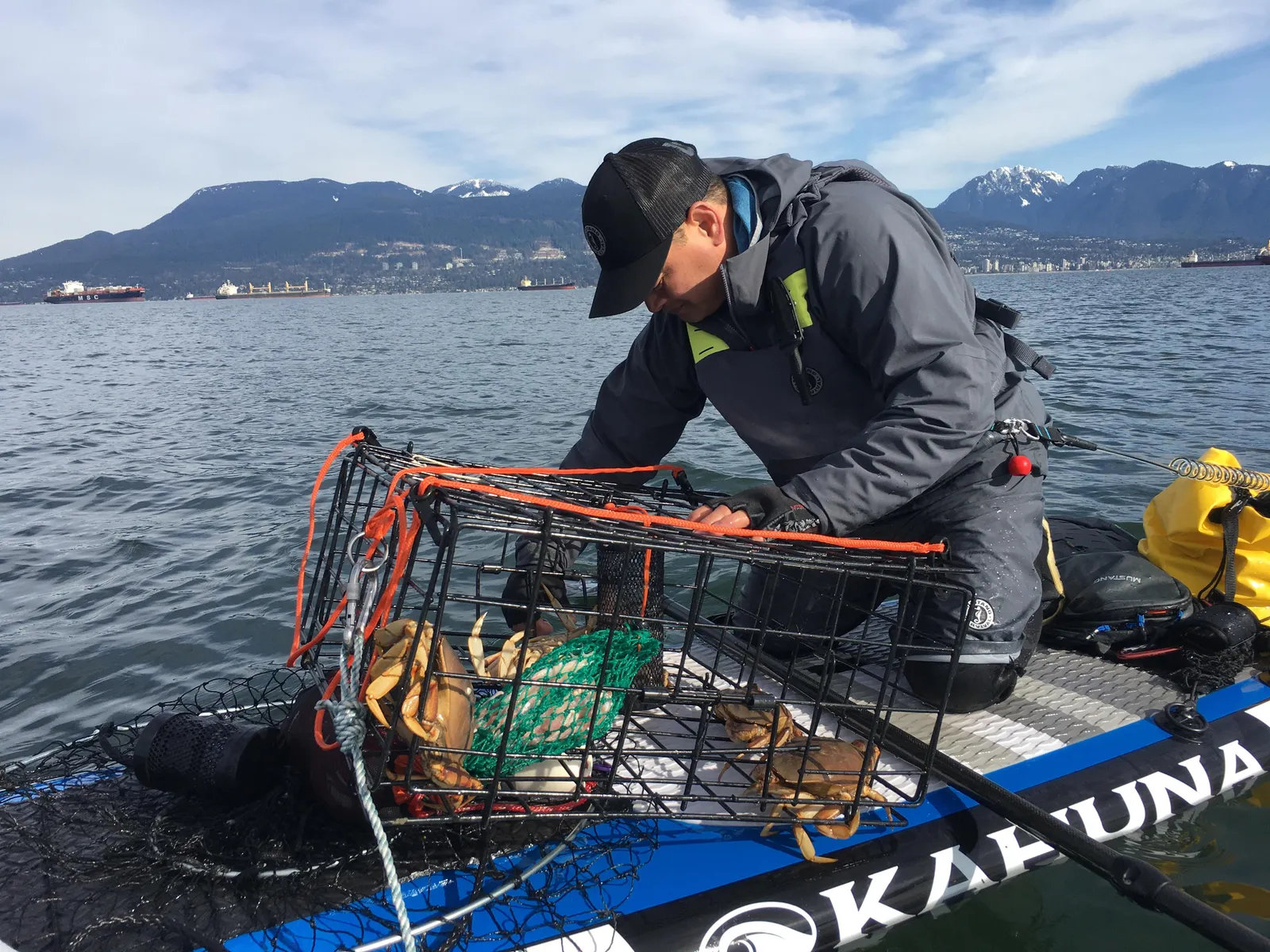
There are three common methods:
- Traps (pots): baited cages that sit on the bottom. You drop them with a line and a float, paddle off, and come back to pull them. Easy, but heavier to carry on a board.
- Rings or hoop nets: flat nets that lie open on the bottom and lift into a basket as you pull them up. You check them every 10–30 minutes or so.
- Hand lines and dip nets: bait tied to a line. When a crab grabs it, you pull it up slowly and scoop the crab with a net. Simple and fun in shallow, clear water.
On a board, rings and hand lines are easiest to manage. Small, collapsible traps work well too.
Where to go crabbing
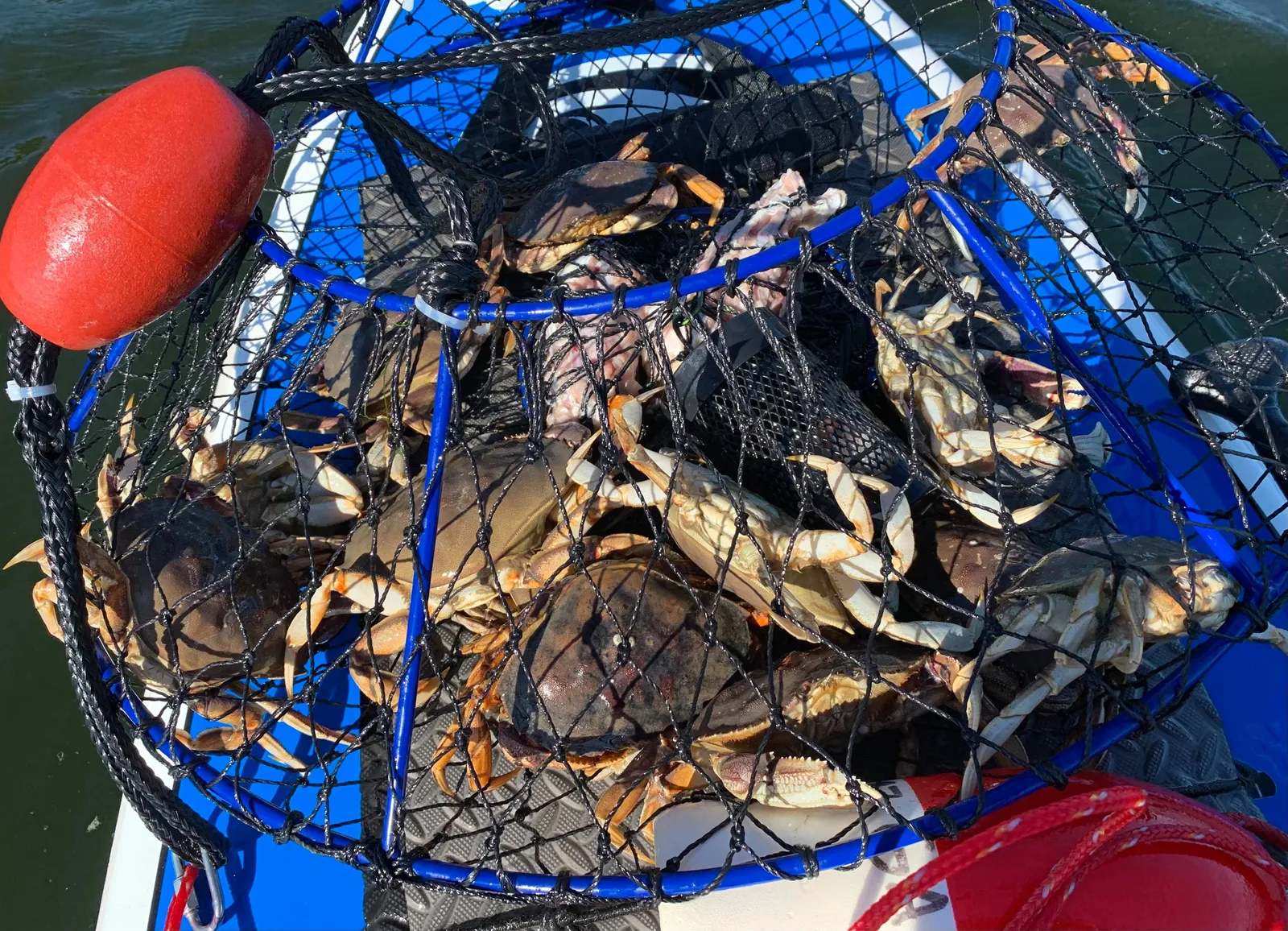
Different coasts have different crabs:
- Blue crabs: the Atlantic coast and Gulf of Mexico, with Chesapeake Bay the best known.
- Dungeness crabs: the Pacific coast from Northern California to Washington and beyond.
- Red rock crabs: also on the Pacific coast.
- Stone crabs: Florida, where you keep the claws only, under strict rules.
Crabs live on the bottom. Good spots are bays, estuaries, tidal creeks and around piers and docks, over sandy, muddy or grassy bottoms. Always check whether the area is open and where traps are allowed.
When to go
Crabs are most active in warm water, so in many places the best crabbing is late spring to early fall. But seasons are set by each state and can change:
- Maryland recreational crabbing season runs April 1 to December 15.
- Washington Puget Sound areas open in summer on dates WDFW sets each year.
- California recreational Dungeness season and trap rules can be delayed or restricted, for example to protect whales from entanglement.
Many crabbers prefer the moving water around a rising tide, when crabs are out feeding. Calm mornings are also easiest on a board.
Do you need a license?
It depends on the state and the gear. A few examples from state agencies, at the time of writing:
- Maryland: no license if you only use hand lines and dip nets, within catch limits (such as two dozen male hard crabs per person). Traps, net rings, trotlines and seines need a recreational crabbing license in Chesapeake Bay waters.
- California: you need a sport fishing license to take crabs (apart from some exemptions such as fishing from a public ocean pier). Using a crab trap also needs a crab trap validation, even on a pier. Hoop nets and crab snares don’t need the validation.
- Washington: you need a fishing or shellfish license, plus a Puget Sound crab endorsement and a catch record card to crab in Puget Sound. You must record every Dungeness crab you keep.
Rules change, and size and sex limits apply almost everywhere. Look up your state’s fish and wildlife agency before you go.
Paddle board crabbing gear
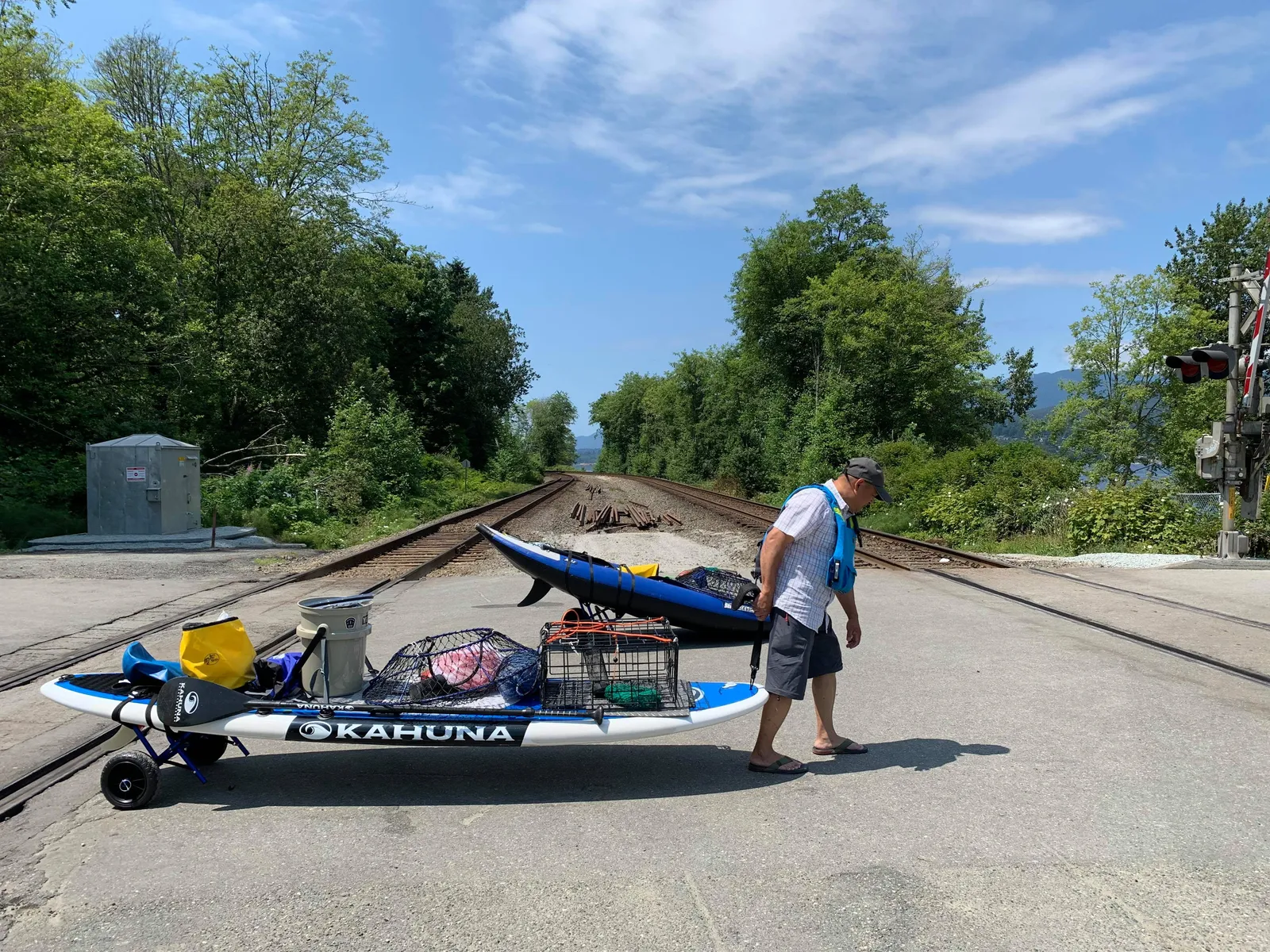
- Traps, rings or hand lines that your state allows.
- Floats or buoys marked as your state requires. Bright colors are easier to find.
- Weighted lines long enough for the depth, plus a little extra for tide.
- Bait: chicken necks, fish heads or other oily fish are common. Check local rules on bait.
- A crab gauge to measure crabs, and a copy of the size limits.
- Gloves and tongs to handle crabs.
- A cooler or bucket strapped to the board.
- A dip net for hand lining.
- A phone in a waterproof case or a GPS to mark your traps.
What board to use
A crabbing board needs to be stable and have space for gear. Look for:
- Length: about 10′6″–11′, so it’s stable and still easy to turn.
- Width: 33″ or wider. You’ll be leaning over the side and pulling up traps.
- Deck space with bungees and plenty of D-rings at both ends.
- Weight capacity that covers you, the gear, wet traps and your catch.
Fishing paddle boards tick all those boxes. See our roundup of the best fishing paddle boards, or use the fishing setting on our Board Fitter to get a size for your weight. A paddle board anchor helps you hold position while you work a ring or line.
Tips for crabbing from a board
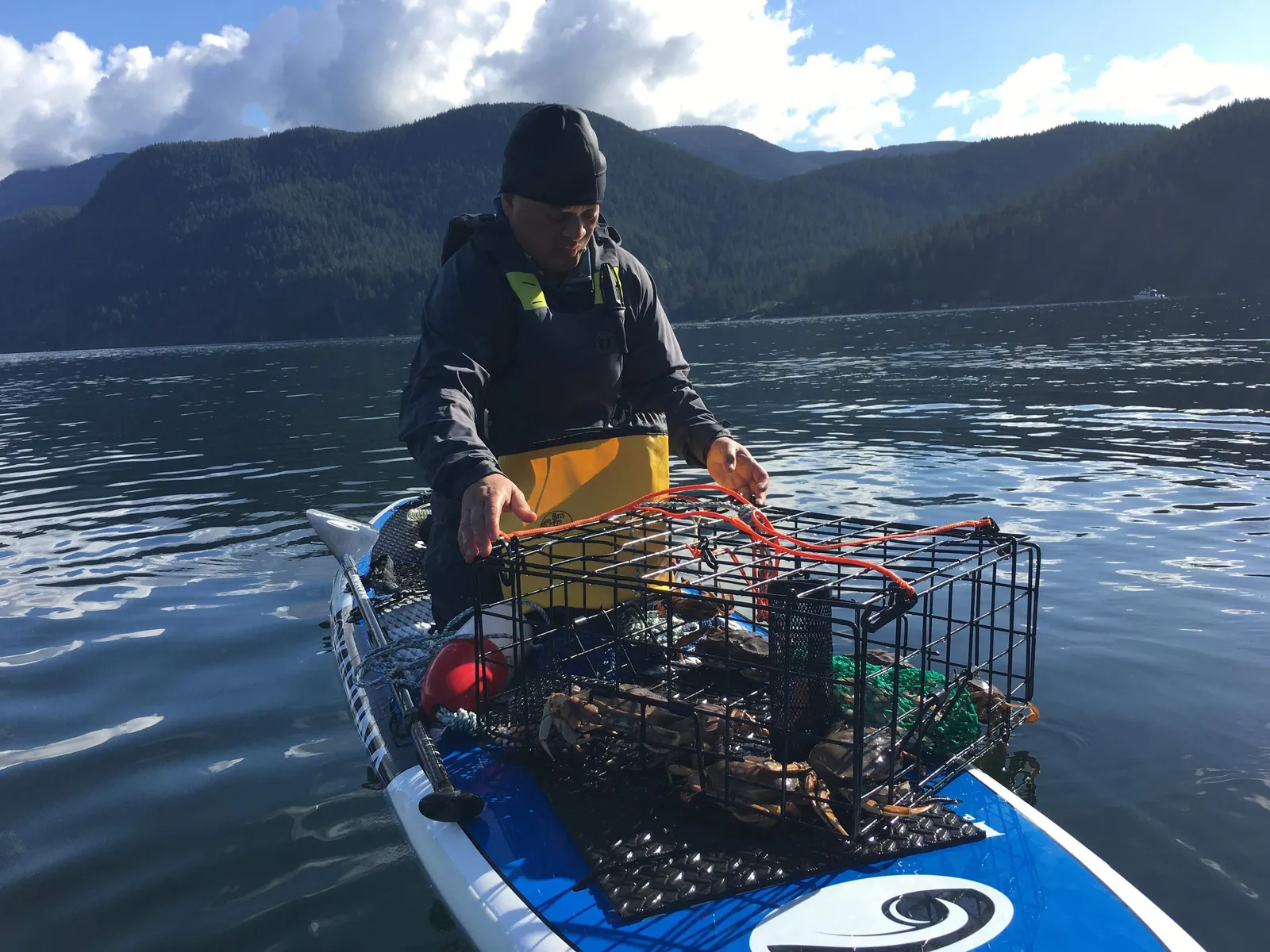
- Wear a life jacket. You’ll be leaning over the side with your hands full. See our pick of the best PFDs for paddle boarding.
- Think about your leash. An ankle leash can tangle in trap lines. Many crabbers attach a leash to their life jacket’s waist belt or use a waist leash.
- Kneel or sit to pull traps. It’s much more stable than standing.
- Clip gear to D-rings with carabiners so nothing slides off.
- Don’t overload the board. Wet traps and a full cooler are heavier than they look.
- Watch the tide and wind. They can move your floats and push you off course. Paddle into the wind first so it helps you home.
- Stay clear of boat channels and give boats plenty of room.
- Launch in calm water. Getting traps through surf on a board is hard and risky.
FAQ
Can you go crabbing on an inflatable paddle board?
Yes. A wide inflatable fishing or all-round board works well. Keep sharp claws and trap edges off the deck where you can, and carry a patch kit.
What’s the easiest way to start?
Try hand lines or a couple of crab rings in calm, shallow water near shore. It’s cheap, easy to manage on a board, and you’ll learn where the crabs are.
Do I need a license to crab from a paddle board?
In many states, yes, at least for some gear. Rules depend on your state, gear and location, so check your state wildlife agency before you go.