The main reasons not to buy a used paddle board are hidden damage you can’t easily see, no warranty (most brands only cover the original buyer), and the risk of ending up with the wrong size. A used board can still be a good deal, but only if it’s the right size for you and you inspect it properly first.
If you’re a beginner and don’t know what to look for, a new board on sale is usually the safer bet.
Quick answer
- Hidden damage: delamination on hard boards and slow leaks on inflatables don’t always show at a glance.
- No warranty: most board warranties are non-transferable, so a problem is yours to fix.
- Wrong size: a cheap board that doesn’t fit your weight is no bargain.
- Old tech: cheap or older inflatables can be soft, flexy and near the end of their life.
- When used makes sense: you know your size, can inspect the board in person, and the price leaves room for repairs.
Reasons to be careful
Hidden damage
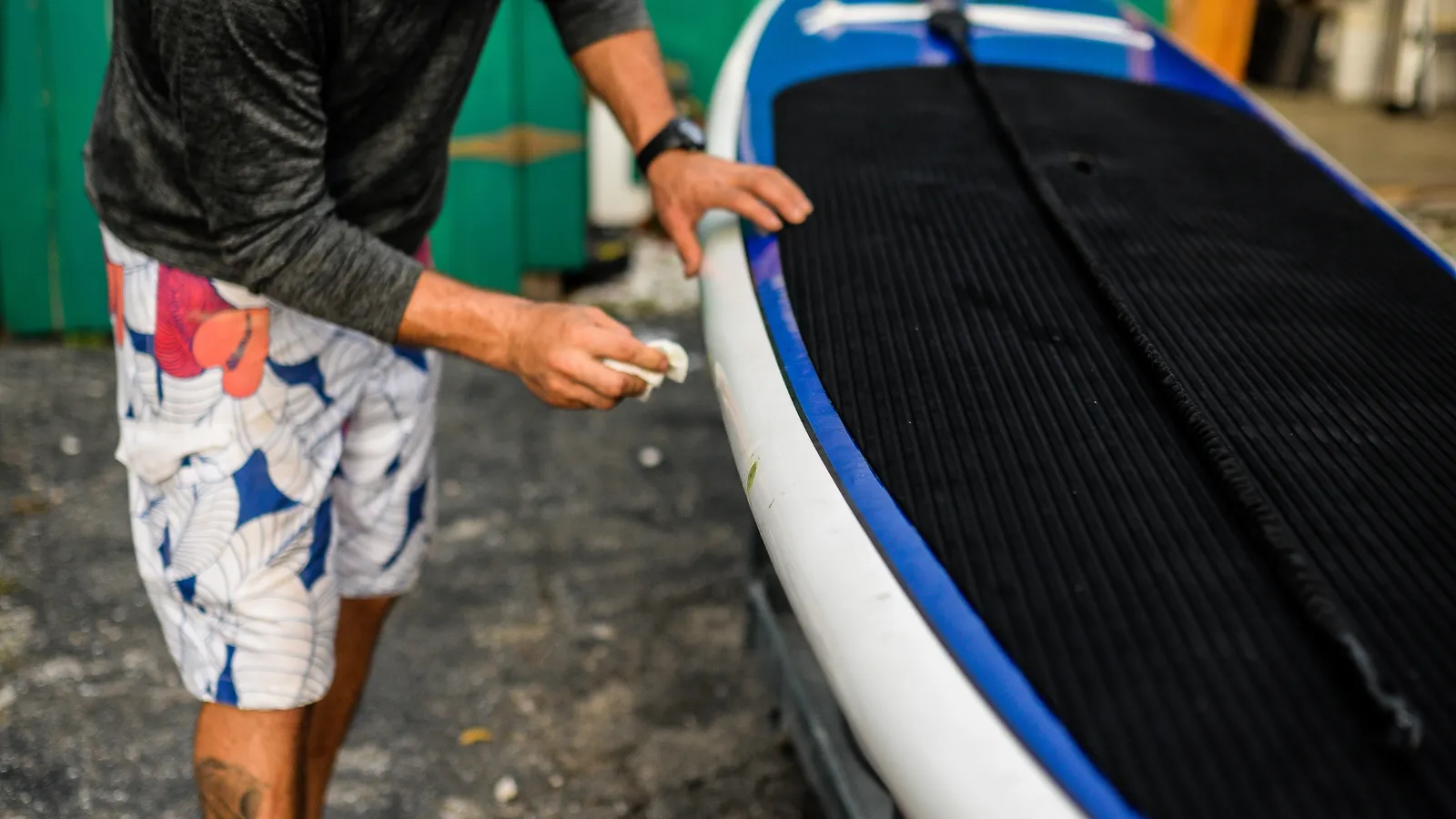
People sell boards for good reasons: they upgraded, moved, or stopped paddling. But some sell because something’s wrong.
On a hard board, the problems are cracks, dings that let water into the foam core, and delamination, where the fiberglass skin separates from the foam. A waterlogged board is heavier than it should be and the damage keeps spreading.
On an inflatable, the risks are slow leaks at the seams or valve, peeling rail tape, and bulges on the deck or bottom. A bulge usually means the internal drop-stitch threads have failed, which is generally the end of the board.
No warranty
Most paddle board warranties only cover the original buyer. iROCKER’s, for example, is explicitly non-transferable and needs proof of purchase from the brand or an authorized seller. Buy privately and, if a seam lets go next month, the cost is yours.
Private sales are also usually final. There’s no return window if you get it home and it leaks.
The wrong size
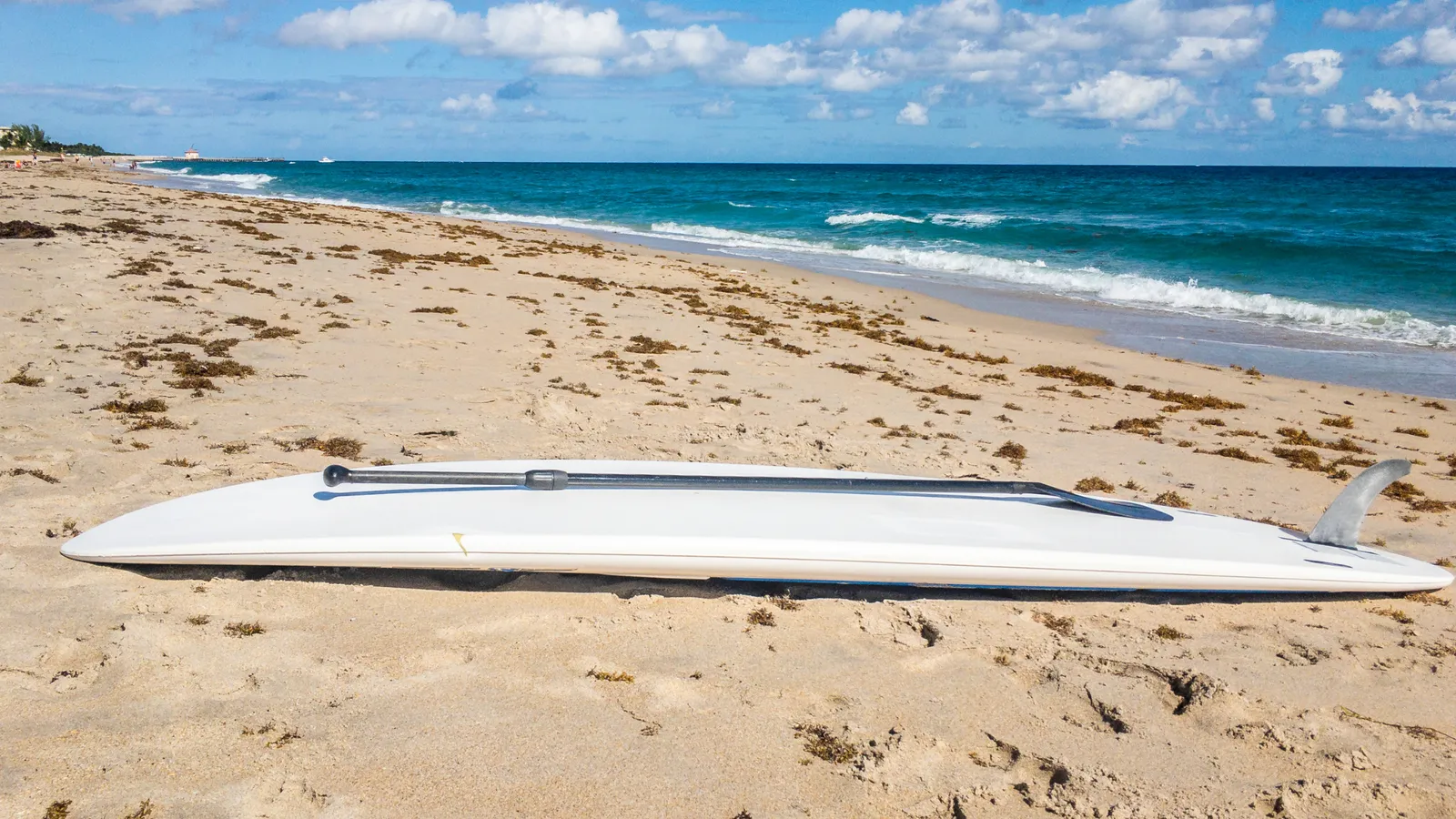
Size matters more than brand. A narrow touring board or a small surf SUP might be a great price, but if you’re a beginner it’ll feel like balancing on a log. A board loaded near its weight limit will feel slow and sluggish.
Know your size before you shop. Our guide to what size paddle board you need explains the rules, and our Board Fitter gives you a length, width and volume to look for in about 30 seconds.
Older or worn-out boards
Inflatables have improved a lot. Older budget boards are often single-layer and flex noticeably. Every inflatable also has a working life, which depends on how it was stored and cared for. See how long inflatable paddle boards last.
When a used board makes sense
Used can be a smart buy if:
- you already know the size you need,
- it’s a well-known brand and model you can look up,
- you can see it, and ideally paddle it, before paying,
- the price is low enough to cover a repair kit or a new paddle.
Shop rental fleets and demo sales at local paddle shops too. They usually know the board’s history.
How to inspect a used paddle board
Paddling Magazine and other buying guides suggest checking these things.
Inflatable boards
- Pump it to the recommended pressure (printed near the valve) and leave it for a day or two. It should still be firm. If the seller won’t let you, ask them to have it inflated overnight before you arrive.
- Check the seams with soapy water. Bubbles mean a leak.
- Look at the rail tape and glue. Peeling, yellowed or crusty glue is a bad sign.
- Check the valve. The pin should spring up and down and the cap should seal.
- Look for bulges on the deck or bottom. Walk away if you see one.
- Check the fin box and D-rings are solid and not lifting.
Hard boards
- Press the deck and bottom with your thumb. Soft or spongy spots mean delamination.
- Look for cracks and dings, especially on the rails and nose. Brown staining around a ding suggests water got in.
- Lift it. If it’s much heavier than the listed weight, it may be waterlogged.
- Check the fin box for cracks and the vent plug is in place.
- Ask how it was stored. Indoors on a rack is good; outside in the sun for years is not.
Either type
- Look up the model and its original specs and weight capacity.
- Check the paddle, leash and pump that come with it.
- Ask why they’re selling.
The bottom line
If you’re new and don’t know the warning signs, buy new. Late-summer clearance and holiday sales get you a new board with a warranty for not much more than a good used one. See when is the best time to buy a paddle board.
If you know your size and can inspect a board properly, a used board from a good brand can be a real bargain.
FAQ
What should I pay for a used paddle board?
There’s no fixed rule. Compare it with what the same board costs new, including on sale. If a used board isn’t clearly cheaper than a discounted new one, buy new and get the warranty.
Can a leaking inflatable paddle board be fixed?
Small punctures in the deck or hull are usually easy to patch. Leaking seams are harder and often a sign of age. See our best inflatable SUP patch kits.
Is a used hard board better than a new inflatable?
It can be, if it’s the right size and in good shape. Hard boards are stiffer and faster. But a ding that’s let water into the core is expensive to fix properly.