Most hard paddle boards are made of an EPS (expanded polystyrene) foam core wrapped in fiberglass and epoxy resin, sometimes with carbon fiber or a wood veneer added. Inflatable paddle boards are made of PVC skins bonded to a drop-stitch core: two fabric layers tied together by thousands of polyester threads that hold the board flat when it’s pumped up.
Cheaper boards use rotomolded plastic or soft foam instead. The material decides a board’s weight, stiffness, durability and price.
Quick answer
| Construction | What it is | Best for | Main downside |
|---|---|---|---|
| Inflatable (PVC + drop-stitch) | Air-filled PVC board | Beginners, travel, small homes | Less stiff and slower than a good hard board |
| Epoxy / fiberglass | EPS foam core, fiberglass and epoxy | All-round, touring, surf | Can ding and crack; needs storage space |
| Carbon fiber | EPS core with carbon layers | Racing, performance | Expensive; can be brittle on impact |
| Wood veneer / wood | Wood layer in the laminate, or hollow wood | Looks, stiffness | Cost and weight |
| Soft top (foam) | Foam deck over a solid core | Kids, families, learning | Slow, heavy-ish, deck can wear |
| Rotomolded plastic | One-piece polyethylene shell | Rentals, camps, rough use | Very heavy and slow |
Hard paddle boards
EPS foam core
Almost every hard board starts as a block of EPS foam, shaped into the board’s outline. The foam is light and floats well, but on its own it’s soft and soaks up water if it’s exposed. Everything else in a hard board is there to protect and stiffen that core.
A good board also has a small vent plug. It lets air inside the foam escape as it heats up in the sun, which stops the skin from bubbling.
Fiberglass and epoxy
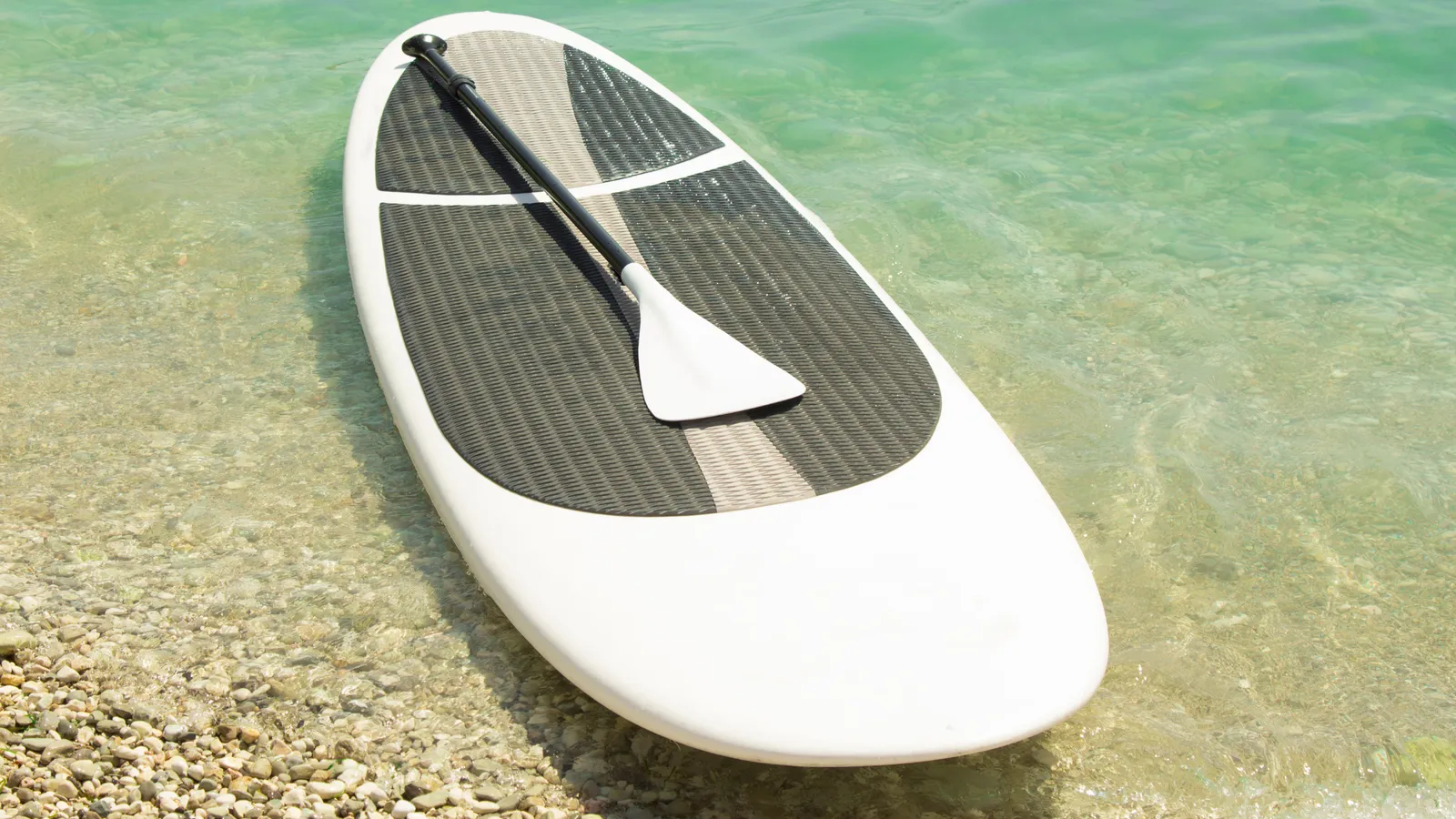
Layers of fiberglass cloth are laid over the foam and soaked in epoxy resin, which hardens into a stiff, waterproof shell. Many boards are vacuum-bagged during this step, which squeezes out extra resin and air for a lighter, stronger lamination.
This is the standard construction for hard all-round and touring boards. It’s stiff, glides well and is fairly light. The weak spot is impact: hitting rocks, or dropping the board on concrete, can crack the shell and let water reach the core.
You’ll also see named variations:
- Wood sandwich: a thin wood veneer between fiberglass layers, often with a PVC patch under your feet for dent resistance.
- AST-style (advanced sandwich): extra fiberglass layers instead of wood or PVC, for a tougher skin.
- Pop-out / molded: the board is laminated in a mold under heat and pressure. It’s consistent and durable, but the shape options are limited because molds are expensive.
Carbon fiber
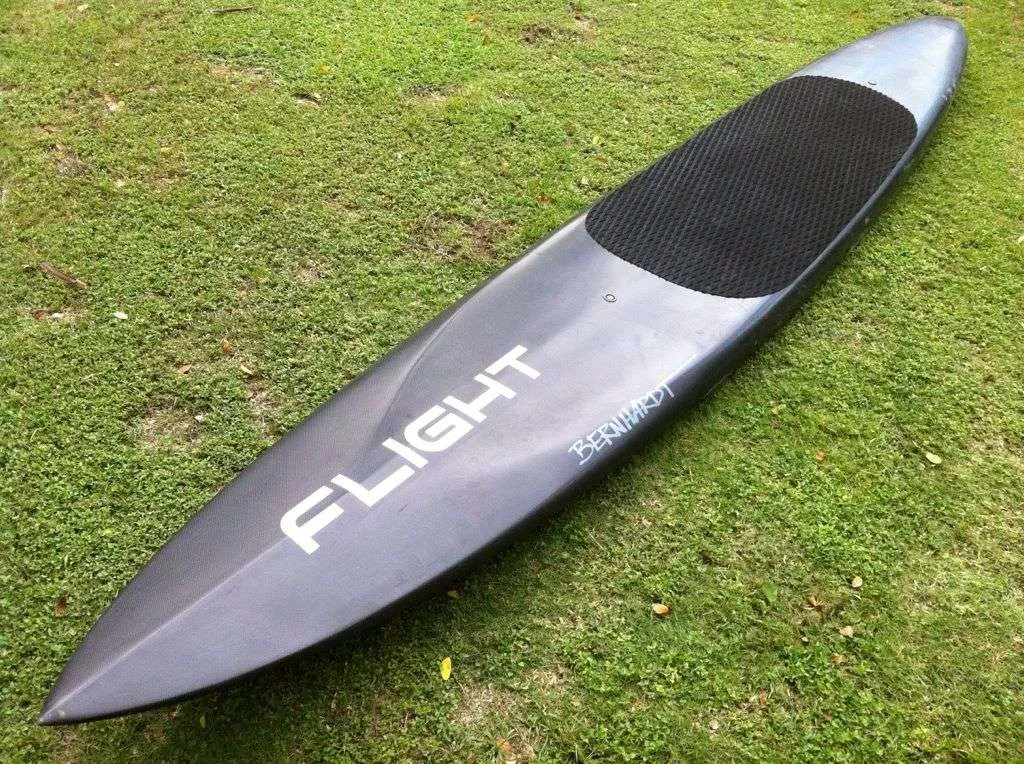
Carbon replaces some or all of the fiberglass. It’s stiffer and lighter, so the board responds faster and is easier to carry. That’s why race and high-end touring boards use it.
Downsides: it costs a lot more, and carbon is stiff but can be brittle under a sharp knock. Most carbon boards are painted, partly to protect the laminate from sun and heat.
Wood
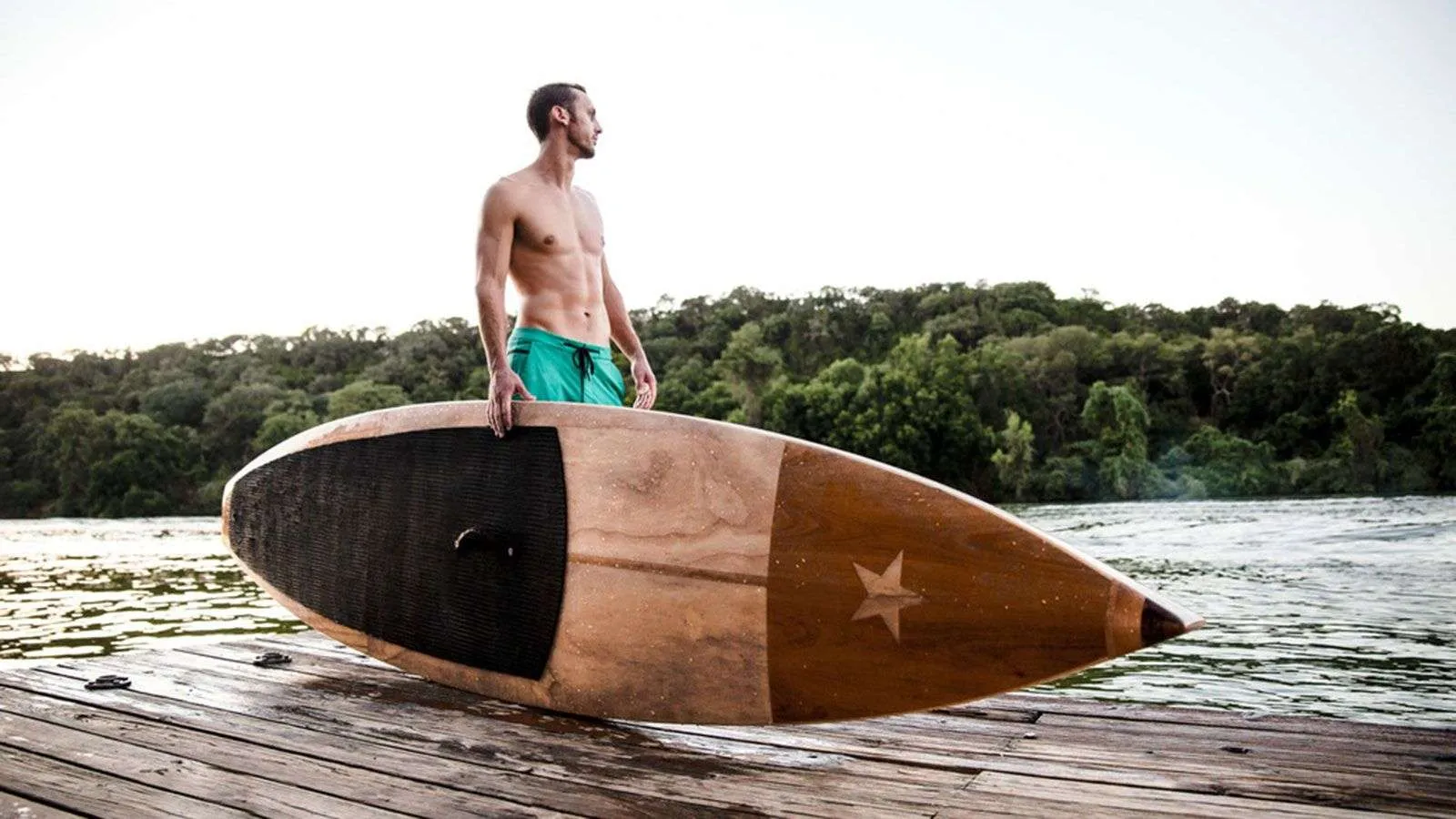
Wood shows up in two ways. Most often, it’s a thin veneer (bamboo, paulownia or similar) laminated into an epoxy board. That adds stiffness and some dent resistance, and it looks good.
Less commonly, the whole board is built from wood: a hollow frame skinned with strips of cedar or other light wood, then sealed in epoxy and fiberglass. These are usually custom or home-built, beautiful, and expensive or labor-intensive. If you’re curious, see our guide to how to make a paddle board.
Soft-top (foam) boards
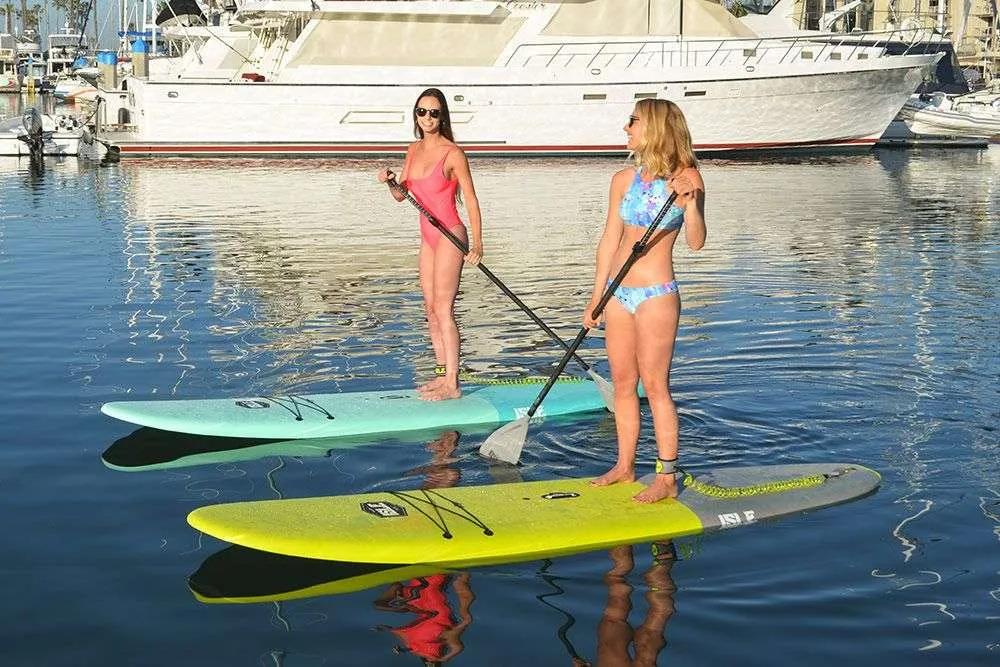
Soft tops have a soft foam deck laminated over a solid core, usually with a slick plastic bottom. They’re forgiving to fall on, cheap and great for kids and family beach days. They’re slower and heavier than epoxy boards, and the deck can dent or peel over time. Our guide to foam paddle boards covers when they make sense.
Rotomolded plastic boards
These are made like most sit-on-top kayaks: polyethylene plastic is melted inside a spinning mold to form a hollow, one-piece shell, sometimes filled with foam. They’re nearly indestructible and inexpensive to make, so rental shops and camps like them. They’re also heavy and slow. OutdoorGearLab’s bargain hard-board pick, the rotomolded Pelican Flow 106, weighs about 46 lb.
Inflatable paddle boards
Drop-stitch core
An inflatable board is basically two sheets of fabric joined by thousands of fine polyester threads. When you pump it up, the threads pull tight and hold the top and bottom flat and parallel. That’s why a good inflatable feels like a plank, not a pool toy.
The fabric is coated in PVC to make it airtight, and the rails (the sides) are sealed with wide strips of PVC tape, glued or heat-welded.
Single layer, double layer and laminated
- Single layer: one PVC skin over the drop-stitch. Light and cheap, but less stiff and less tough.
- Double layer: a second PVC layer glued on by hand. Stiffer and more durable, but heavier.
- Laminated or “fusion”: the second layer is bonded on by machine with heat and pressure instead of glue. You get most of the stiffness of double layer with less weight.
Knitted vs woven drop-stitch
Most boards use knitted drop-stitch. Some premium brands now use woven drop-stitch, with threads woven in a crisscross pattern. Starboard says its woven core cuts about 1.5 kg (around 3 lb) from a board and makes it stiffer. That’s the manufacturer’s claim; woven boards also cost more.
Why inflatables are so popular
- They roll up into a backpack and fit in a closet or car trunk.
- They’re forgiving to fall on and hard to ding.
- They’re usually cheaper than a hard board of similar quality.
The trade-off is performance. Even a good inflatable flexes a little more and glides a little less than a good hard board, and it’s affected more by wind. Our guide on whether inflatable paddle boards are worth it goes through the trade-offs, and how long inflatable paddle boards last covers durability.
Which material should you choose?
- First board, small home, or you travel: a well-built inflatable, about 6″ thick.
- You live near the water and want performance: an epoxy/fiberglass hard board.
- Racing or serious touring: carbon, if the budget allows.
- Kids, rentals or a beach house: a soft top or rotomolded plastic board.
Whatever you choose, size it to your weight first. Our Board Fitter gives you a length, width and volume to look for.
FAQ
Are paddle boards made of foam?
Most hard boards have a foam core (EPS), but it’s sealed inside fiberglass and epoxy. “Foam boards” usually means soft tops, which have a soft foam deck you can feel.
What is the most durable paddle board material?
For knocks and drops, rotomolded plastic and good inflatables are the toughest. Epoxy boards are stiffer and faster but can crack on rocks.
Why is carbon fiber so expensive?
The material itself costs more than fiberglass, and carbon boards are usually high-end models with more hand work. See why paddle boards are so expensive.