Paddle boarding mainly works your core (abs and lower back), your lats (the big muscles down the sides of your back), and your shoulders and arms, which drive every stroke. Your legs, ankles and feet work constantly to keep you balanced, but research suggests paddling alone isn’t hard enough on the thighs and glutes to strengthen them much.
How hard any of it works depends on you. A gentle cruise is light exercise; paddling hard, into wind or on a race board, is a real workout.
Quick answer
| Muscles | How much they work |
|---|---|
| Core (abs and lower back) | A lot. A study found enough activation to build strength at moderate effort. |
| Obliques (sides of your waist) | Mainly when you paddle hard and rotate your torso. |
| Lats and upper back | A lot. They pull the board past the paddle. |
| Shoulders | Steadily, through every stroke. |
| Arms and grip | Moderately, more so if you “arm paddle”. |
| Legs and glutes | Mainly for balance. Not enough on their own to build much strength. |
| Feet and ankles | Constantly, making small balance corrections. |
What the research says
Two University of Wisconsin studies measured paddlers’ muscle activity with sensors on the skin (EMG). One, at UW–La Crosse and sponsored by the American Council on Exercise (ACE), looked at the core in experienced paddlers. The other compared the core, lats, glutes and thighs during paddling and treadmill running.
- Core: the rectus abdominis (front abs) and erector spinae (lower back) were activated enough to build strength even at moderate effort.
- Obliques: only reached that level when people paddled hard, likely because harder paddling means more torso rotation.
- Lats: were well worked at moderate to hard effort.
- Thighs and glutes: paddling didn’t activate them enough to train them. The study suggested running is a better way to strengthen those muscles.
So paddle boarding is a strong core and upper-body workout, with your legs mostly along for balance.
Muscle by muscle
Core
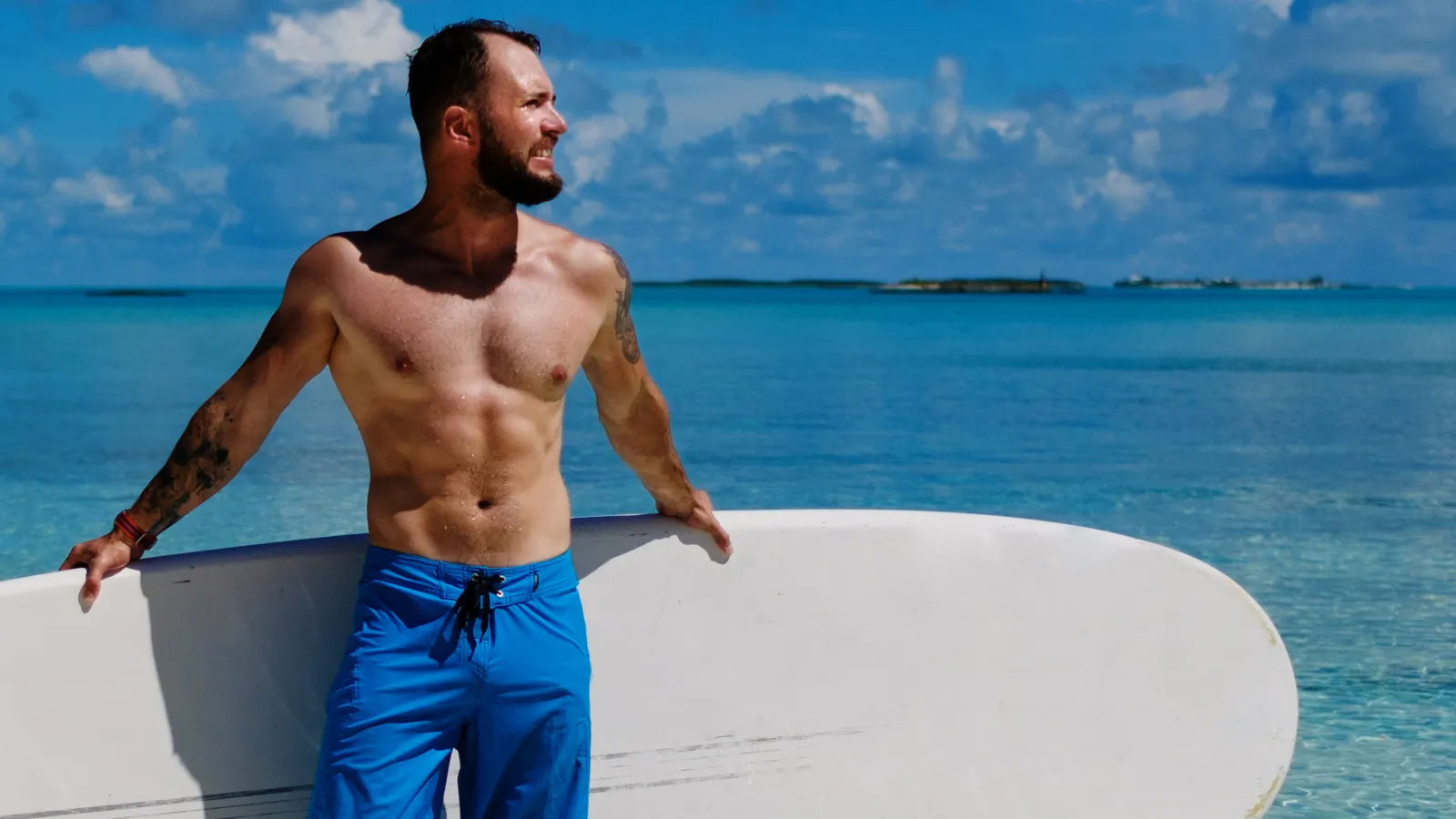
Your core does two jobs on a board. It keeps you upright as the water moves, and it transfers power from your upper body to the board on each stroke. The more you rotate from the hips and torso (rather than pulling with your arms), the harder your abs, obliques and lower back work.
Back: lats, traps and rhomboids
Good paddling technique puts your back in charge. The lats pull the paddle (or really, pull the board past the planted paddle), and the muscles between your shoulder blades help control the stroke. If your back is tired after a paddle and your arms aren’t, you’re doing it right.
Shoulders
Your shoulders guide the paddle through every stroke: reaching forward, planting the blade, pulling and lifting it out. The small rotator cuff muscles keep the joint stable. New paddlers often feel it in their shoulders first.
Arms and grip
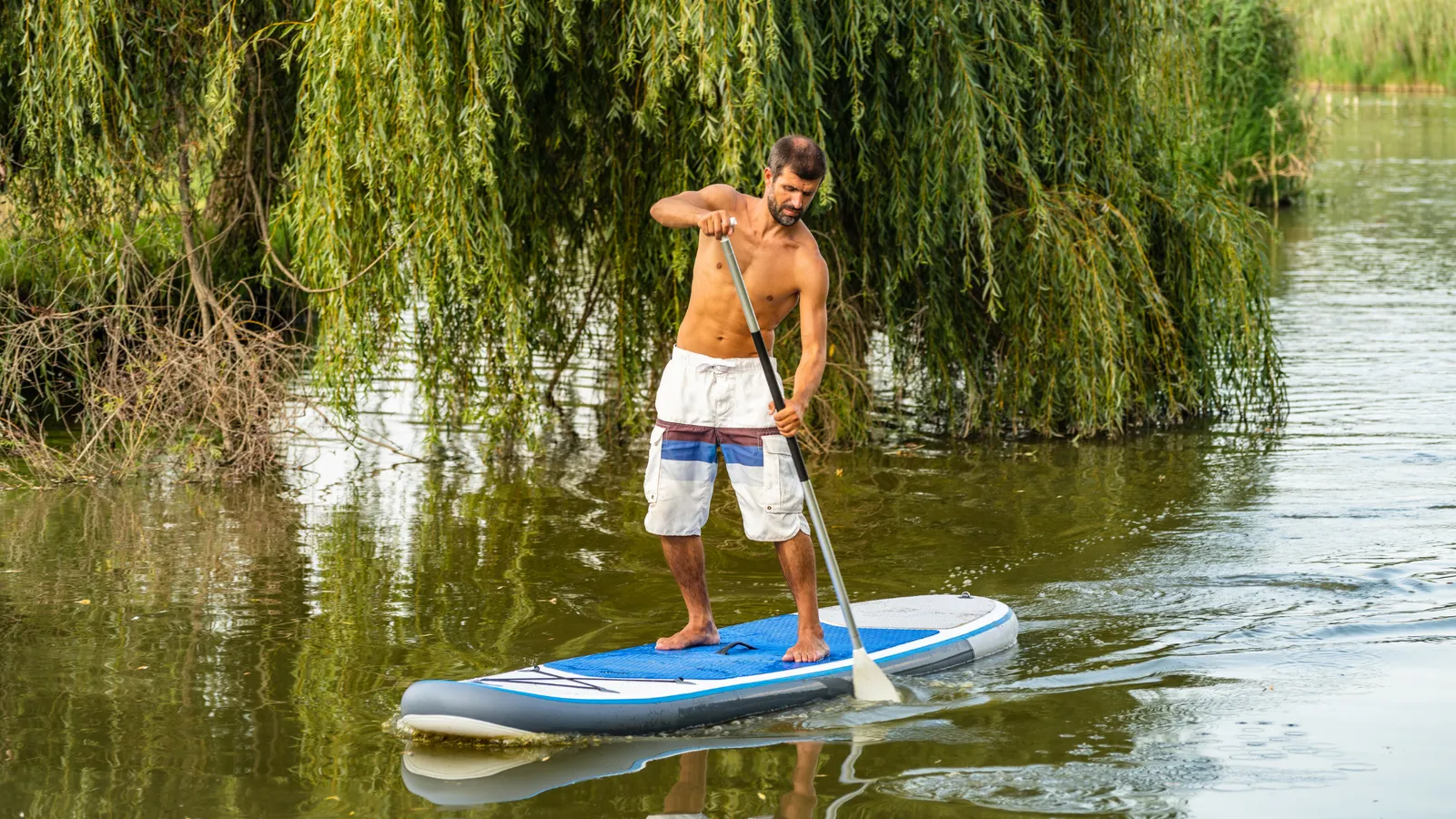
Your biceps, triceps and forearms help steer and hold the paddle, but they shouldn’t do most of the work. If your arms burn quickly, try keeping them straighter and rotating from your torso. Our guide to how to hold a paddle board paddle covers grip and technique.
Legs, ankles and feet
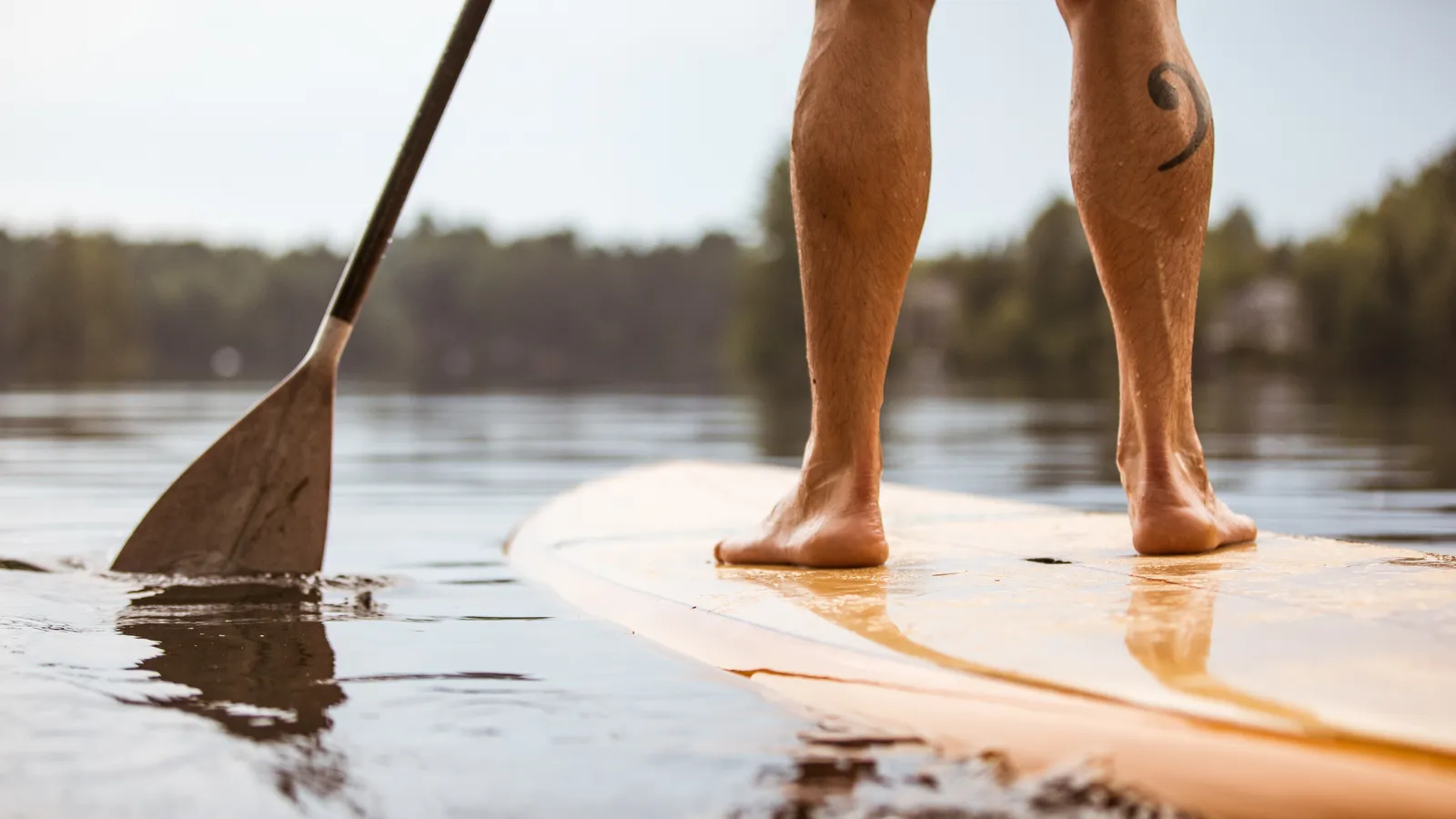
Your legs make constant small corrections to keep the board level, especially in chop or wakes. Your feet and ankles work hard too. That builds balance and stability, but on flat water it’s light work for the big leg muscles. You’ll feel your legs more in waves, on a narrow board, or if you do squats and lunges on the board.
How to make it a harder workout
- Paddle harder. In ACE’s research, beginners paddling at their own pace on the water often didn’t reach a heart rate high enough to improve fitness. Pick up the pace in intervals.
- Use your torso. Rotate from your hips and core on each stroke.
- Paddle into the wind or current (safely, near shore) for resistance.
- Kneel and paddle, then stand. Getting up and down works your legs and core.
- Add on-board exercises: squats, lunges, planks and push-ups on a stable board in calm water.
- Try paddle board yoga for balance and flexibility.
A full-body, low-impact workout
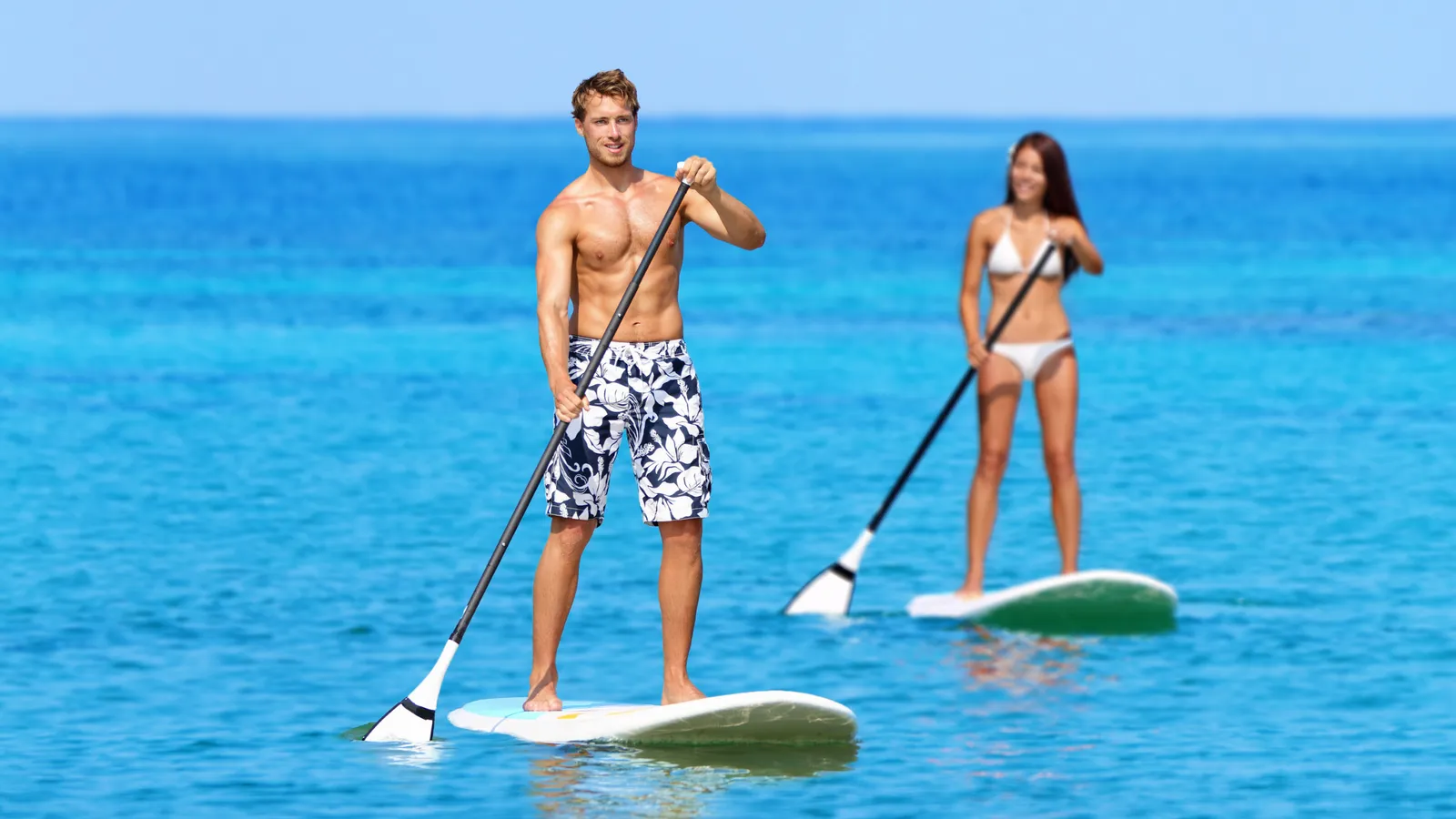
Paddle boarding is low-impact, so it’s easier on your joints than running, and you can make it as gentle or as hard as you like. That’s why it suits everyone from beginners to racers. For the bigger picture, read is paddle boarding good exercise, and use our calories calculator to estimate how much energy your session burns. Our guide to how many calories paddle boarding burns explains the numbers.
FAQ
Is paddle boarding good for abs?
Yes. Research found it activates the front abs and lower back enough to build strength at moderate effort, and the obliques when you paddle hard.
Does paddle boarding work your legs?
Your legs work constantly for balance, but on flat water it’s not enough to build much strength. Add squats or lunges on the board, or paddle in choppier water, to work them harder.
Why is my back sore after paddle boarding?
Your back muscles do much of the paddling, so some muscle tiredness is normal. Sharp or lower-back pain often comes from bending at the waist instead of the knees, or from a paddle that’s the wrong length. Keep a slight bend in your knees and a straight back.
Is paddle boarding better exercise than kayaking?
They work similar upper-body and core muscles. Standing adds constant balance work for your legs, feet and core, so paddle boarding is a bit more of a full-body activity.