Most recreational paddlers cruise at about 3 mph on a paddle board, with beginners nearer 2 mph and fit, confident paddlers at 4 mph or a bit more. Racers on long, narrow boards push past 5 mph, but only in short bursts or with a lot of training.
Average paddle board speeds at a glance
| Paddler | Typical speed | Roughly 1 mile in |
|---|---|---|
| Beginner, casual pace | 2–3 mph | 20–30 min |
| Confident recreational | 3.5–4.5 mph | 13–17 min |
| Long-distance steady pace | 4–5 mph | 12–15 min |
| Racing / sprinting | 5 mph and up | under 12 min |
These ranges come from Bluefin SUP’s speed guide and line up with testing by ISLE (below). Want to plan a trip? Our trip time calculator turns distance, pace and board type into a time.
Recreational paddle board speed
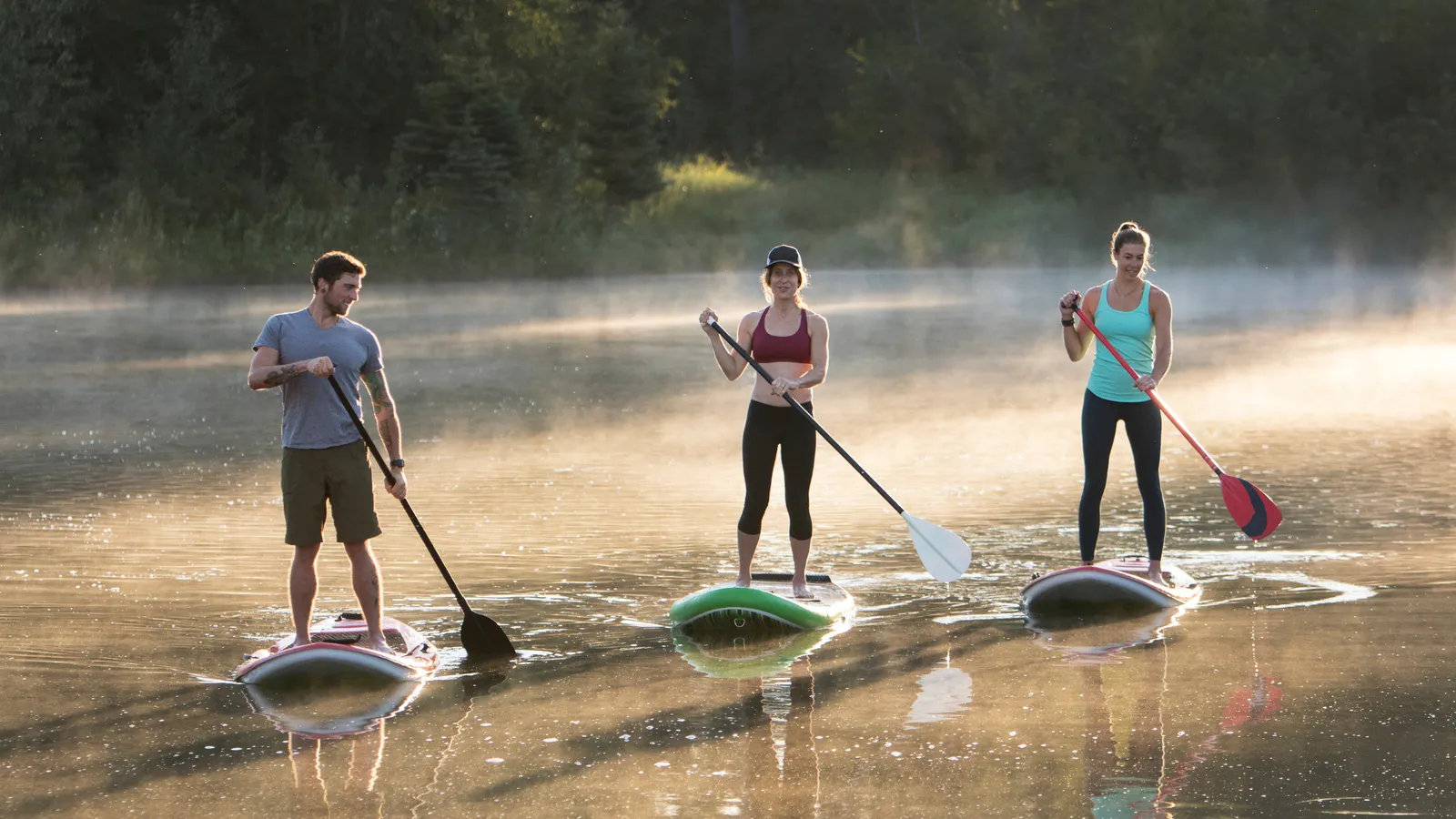
On a typical 10’6” all-around board on calm water, a relaxed pace of 2–3 mph is normal. That’s about the same as a slow walk. With better technique, you’ll settle at around 3–4 mph without much extra effort.
Beginners are usually slower because they’re focused on balance, use short arm-only strokes, and zigzag as they switch sides. That improves quickly.
Racing paddle board speed
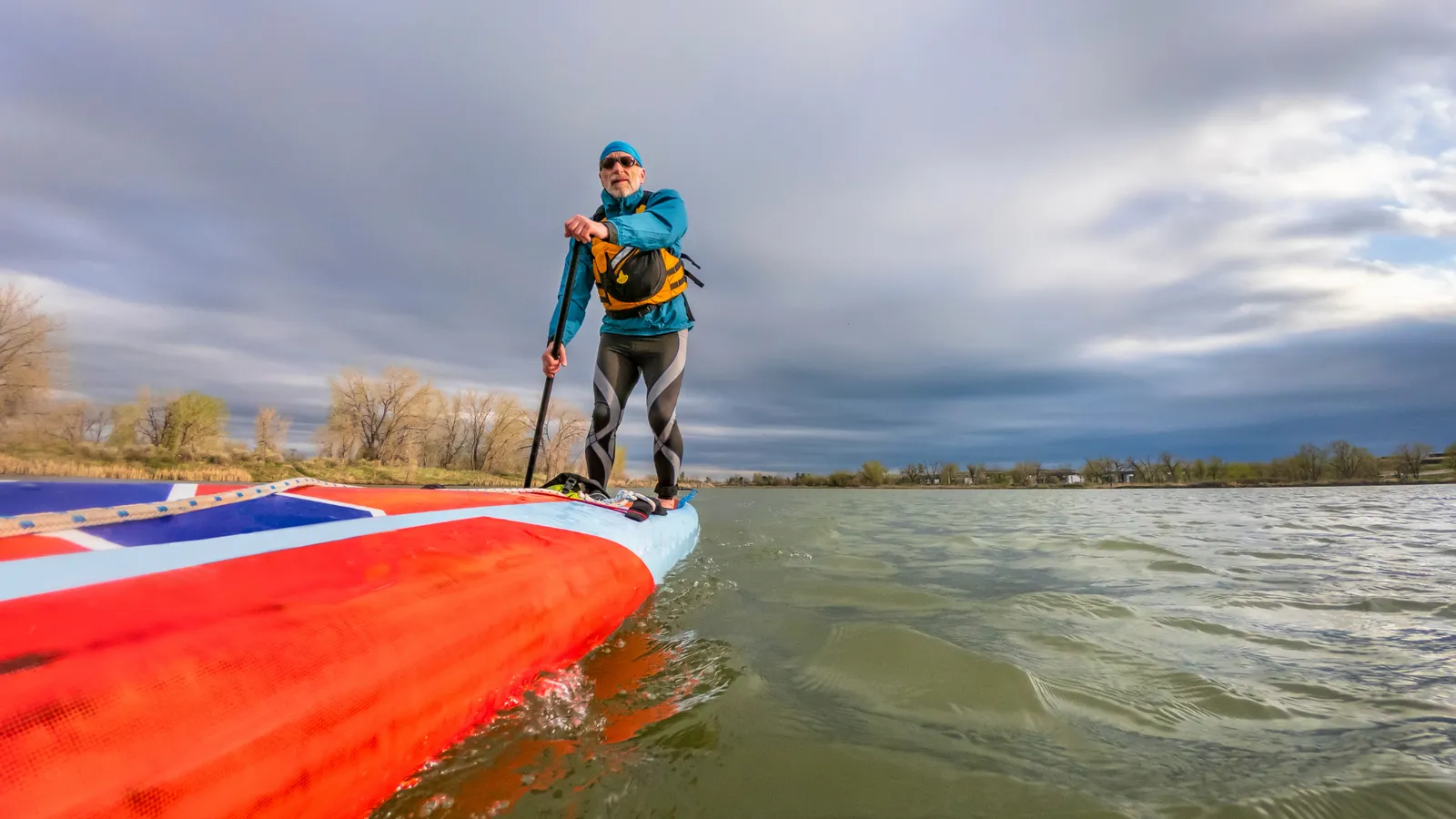
Race boards are long (12’6” or 14’) and narrow, built to glide rather than to be stable. Trained racers on them hold 5 mph and up over a race distance, and go faster in sprints or when catching wind swell and boat wakes on a downwind run.
Inflatable vs hard board speed
Hard boards are a little faster, but not by much. ISLE ran a test on a half-mile flat-water course in Coronado Bay with two 12’6” boards, one inflatable touring board and one epoxy race board, measured with a SpeedCoach device:
| Pace | Inflatable | Epoxy |
|---|---|---|
| Relaxed | 3.78 mph | 3.96 mph |
| Hard | 4.88 mph | 5.21 mph |
The epoxy board was about 6% faster. That gap matters in a race but barely shows on a recreational paddle. Note that these were long touring and race boards. A shorter, wider all-around board will be slower than either.
What affects your paddle board speed
Wind
Wind is the biggest factor most days. A strong headwind can slow you to a crawl, because your body acts like a sail. A tailwind does the opposite. Always paddle into the wind first, so it helps you home when you’re tired. See what are the best conditions for paddle boarding.
Current and tide
On rivers and tidal water, the current adds to or subtracts from your speed. A 1 mph current against you turns a 3 mph pace into 2 mph. Plan trips so the tide or current is behind you on the way back.
Water conditions
Flat water is fastest. Chop and boat wakes make you slow down to stay balanced. Very shallow water can slow you down too.
Board length and width
Longer boards glide further on each stroke, and narrower boards push less water aside. That’s why touring boards (11’6” and longer) are faster than all-around boards, and race boards are faster still. The trade-off is stability: narrow boards are tippier. Our Board Fitter can help you find a size that balances speed and stability for your weight.
Board size for your weight
A board that’s too small for you sits low in the water and drags. A board that’s much bigger than you need is wider and heavier than necessary. Paddling the right size helps both speed and balance.
Technique and fitness
Good technique matters more than strength. A full-body stroke, using your core and legs rather than just your arms, moves you faster for longer. Fitness lets you keep that pace up.
Load
A cooler, a dog, a child or a second paddler on the board all slow you down.
How to paddle faster
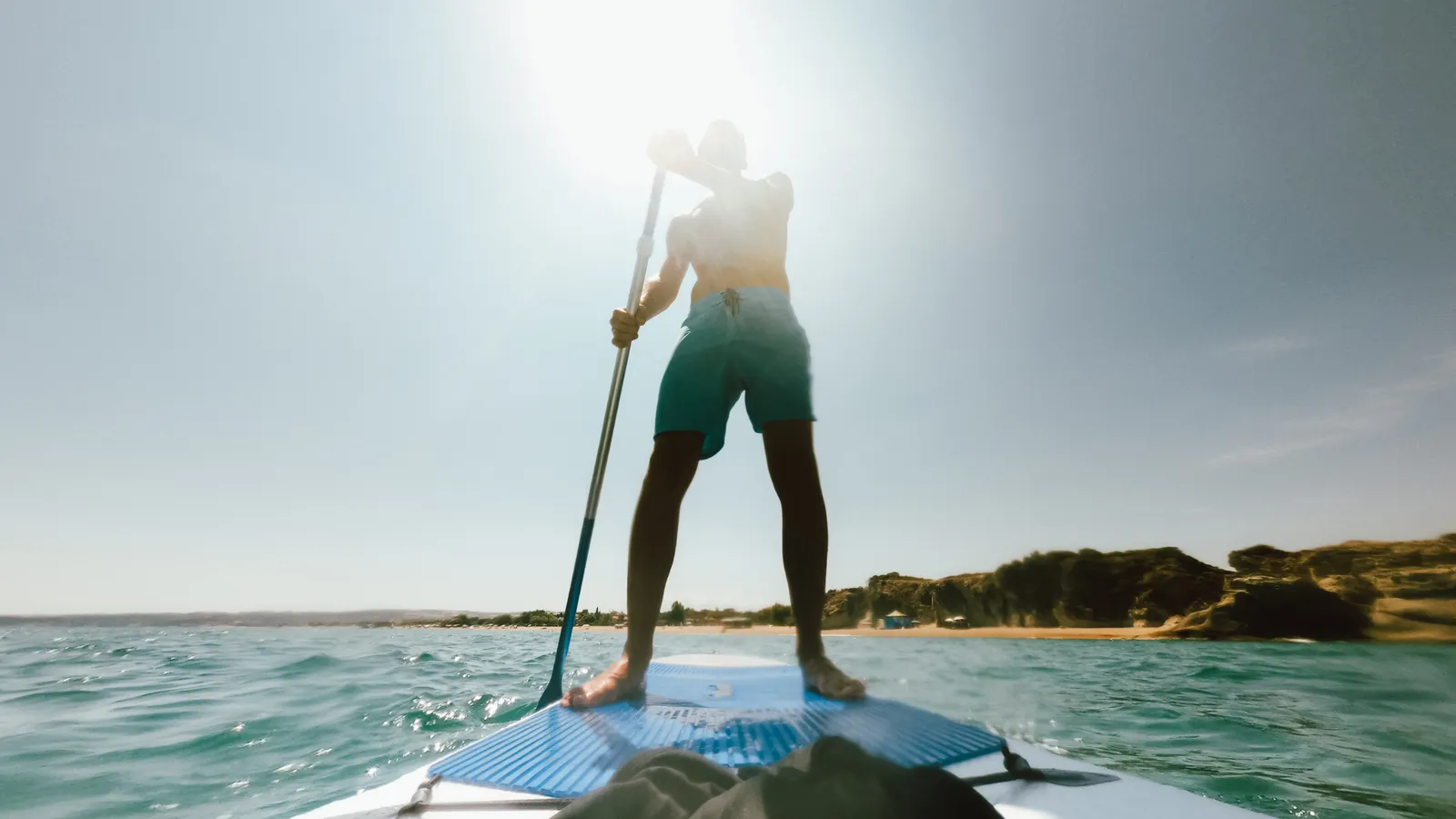
- Plant the whole blade in the water before you pull, and pull it out by your feet. Long strokes behind your feet waste energy.
- Rotate from your core instead of pulling with your arms.
- Keep the paddle shaft vertical as you pull, so the board goes straight. See how to paddle a SUP straight.
- Find a steady rhythm you can hold, rather than sprinting and resting.
- Use the right paddle length. A paddle that’s too long or short wastes effort. See how to hold a paddle board paddle.
- Pump an inflatable to its full recommended pressure. A soft board flexes and drags.
- Pick calm conditions and plan your route with the wind and current.
FAQ
How long does it take to paddle board 1 mile?
At an average recreational pace of about 3 mph, roughly 20 minutes. Beginners may take 30 minutes. See how long does it take to paddle board 1 mile.
How fast can you go on a paddle board?
Trained racers hold more than 5 mph over a race, and go faster in sprints or with wind and waves behind them. Most people paddle at 2–4 mph.
Is a paddle board faster than a kayak?
Usually not. A kayak paddler sits low, out of the wind, and uses a double-bladed paddle, so kayaks are generally faster for the same effort.
Are inflatable paddle boards slower?
A little. ISLE’s test found a hard board about 6% faster than a same-length inflatable. For casual paddling you won’t notice it.