When you shop for a paddle board, look first at the type (inflatable, hard or soft top), then the size for your weight and the way you’ll paddle, then build quality and weight capacity. Fins, the paddle and the accessories in the box come after that, but they make a real difference to how much you enjoy it.
Quick answer
- Type: inflatable for most beginners, small homes and travel; hard board for touring, surfing and storing by the water.
- Size: about 10′–11′ long and 32–34″ wide for a first board. Use our Board Fitter to size it to your weight.
- Capacity: your weight plus gear should sit well under the board’s limit.
- Build: on inflatables, look for a reinforced (double-layer or laminated) skin and about 6″ thickness.
- Fins: a single center fin or 2+1 setup suits flat water.
- Extras: a decent paddle, a leash and a Coast Guard–approved life jacket.
Pick the type first
Inflatable paddle boards
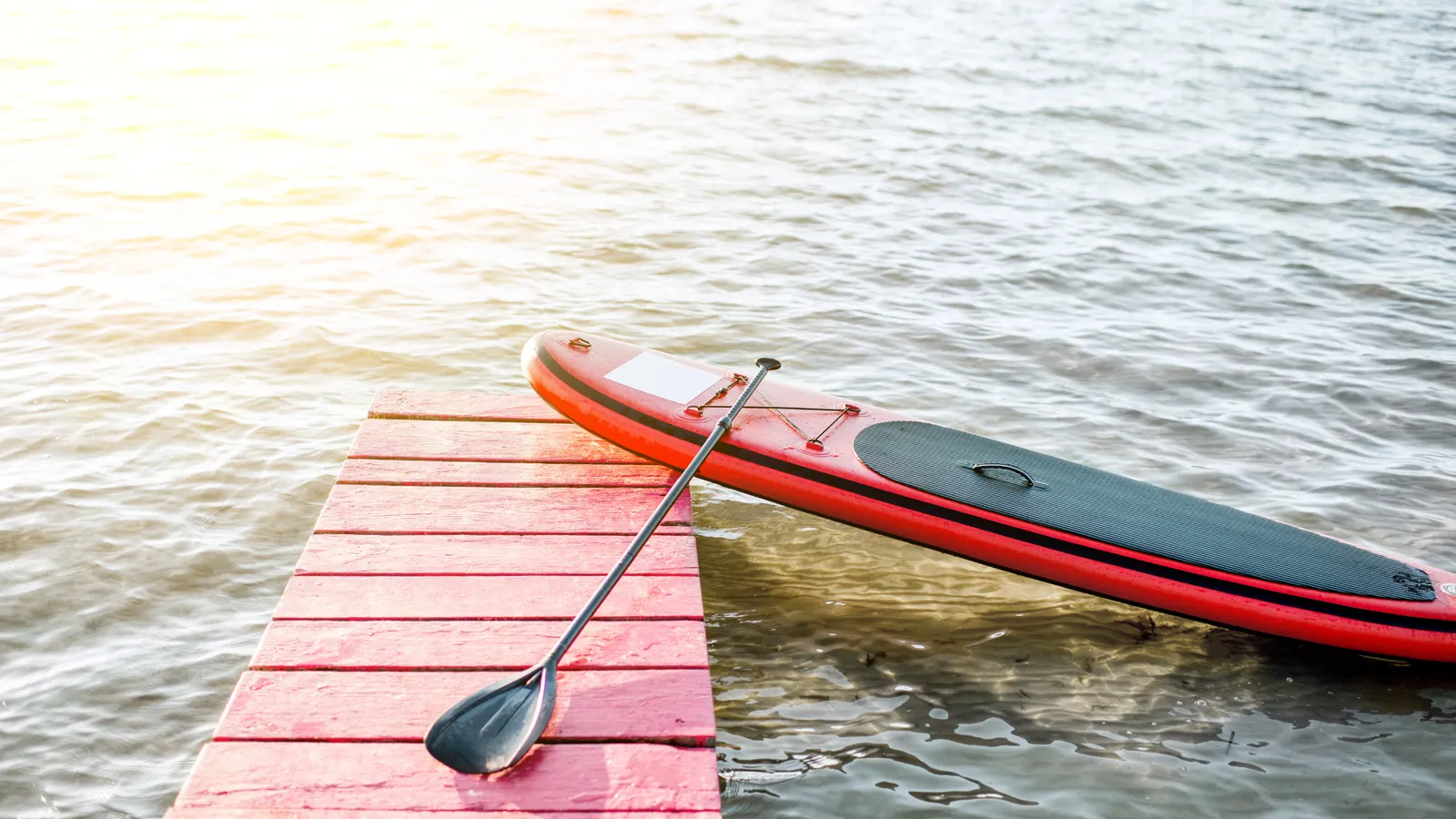
Inflatables are the default first board now, for good reasons. They roll into a backpack, store in a closet, and shrug off bumps on rocks and docks. Well-made ones get impressively stiff at full pressure.
- Good for: beginners, apartments, travel, hike-in lakes, yoga, rivers.
- Watch for: you have to pump them up (a few minutes with an electric pump, longer by hand), and they’re a bit slower and less precise than a good hard board.
See our take on whether inflatable paddle boards are worth it.
Hard (epoxy) paddle boards
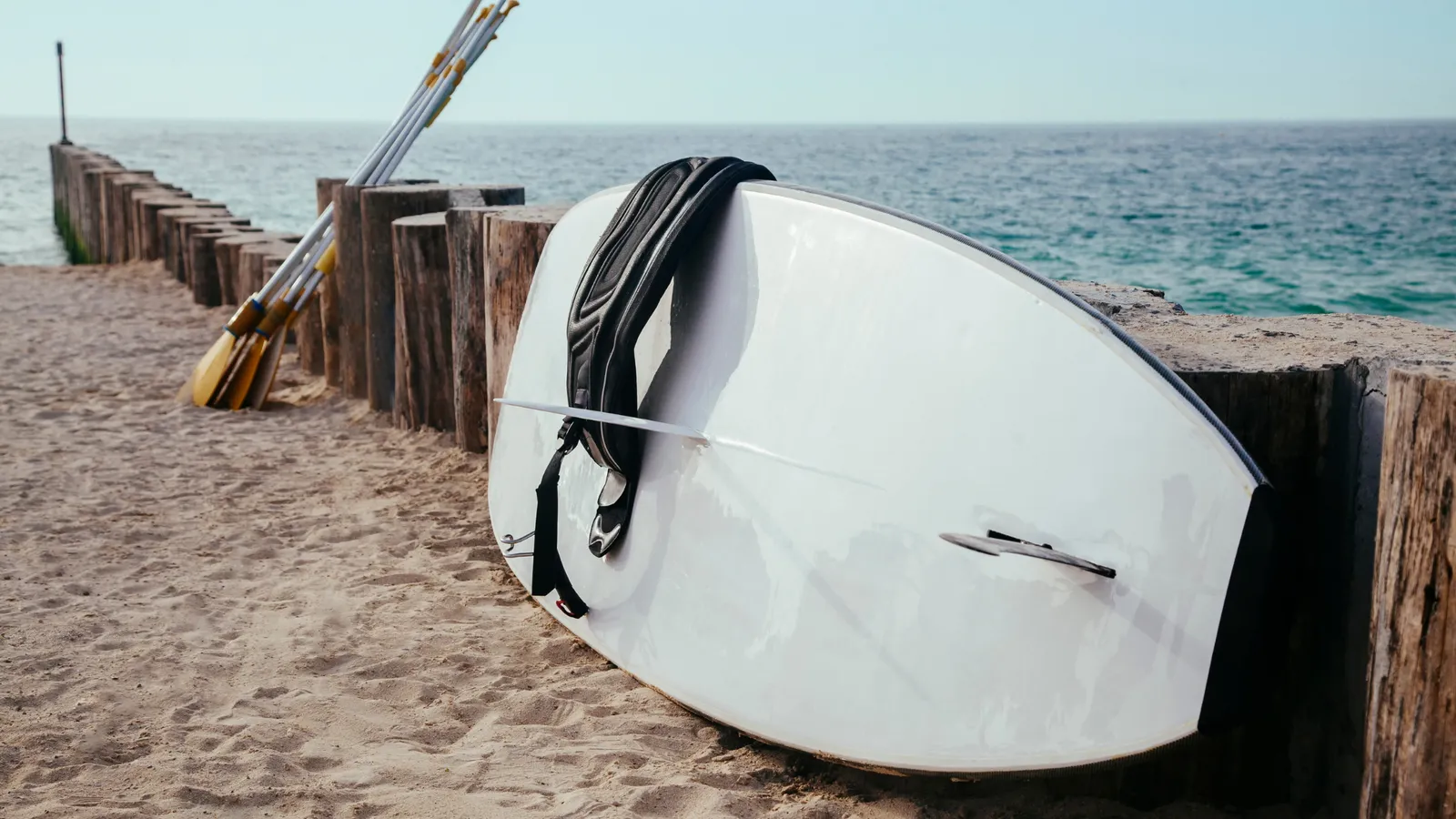
Most hard boards are an EPS foam core wrapped in fiberglass and epoxy. They’re stiffer, glide better and handle waves and wind better than inflatables.
- Good for: touring, racing, SUP surfing, and anyone who lives near the water with space to store a 10–12 foot board.
- Watch for: you need a roof rack or truck bed, storage space, and care with dings on rocks. They usually cost more than an inflatable of the same quality.
Soft-top and plastic boards
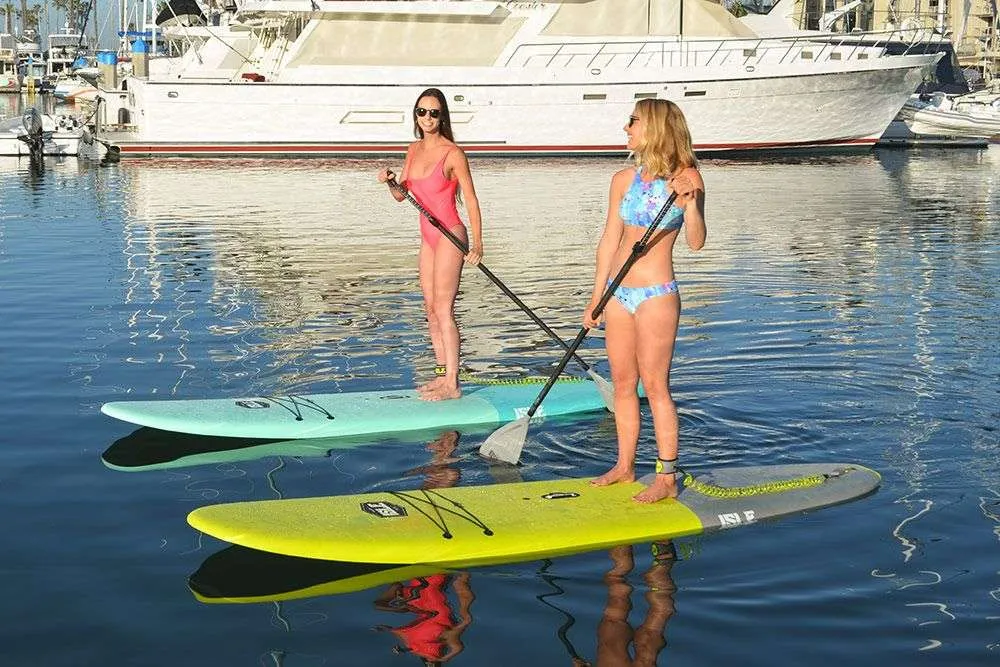
Soft tops have a foam deck over a solid core, so they’re kind to falls and to kids. Rotomolded plastic boards are heavy but very tough and cheap. Both are good for beach houses, rental fleets and families. Neither is fast.
Get the size right
Size matters more than brand. A board that’s too narrow or too small is the main reason beginners struggle.
- Length follows use: under 10′ for surf and kids, 10′–11′ for all-round, yoga and fishing, 12′+ for touring.
- Width follows experience: 32–34″ to learn on, 30–32″ once you’re steady. Yoga and fishing boards are usually 33″ or wider.
- Thickness: about 6″ for an adult inflatable; hard boards are thinner.
Our full guide to what size paddle board you need explains each rule. The Board Fitter does the maths for your weight, skill and use.
Volume and weight capacity
Every board lists a maximum weight. Add up your weight, any passenger and your gear, and leave a good margin. A board loaded near its limit sits low and paddles slowly. BOTE, for one, suggests sizing up if you’re within 50 lb of a board’s capacity.
Hull shape changes how much this matters:
- Planing hulls (flat, rounded nose) are forgiving. As long as you’re under capacity, they behave.
- Displacement hulls (pointed nose, common on touring boards) are designed around a load range. Too heavy and they drag; too light and they ride high and feel twitchy.
Volume is listed in litres. More volume floats more weight. Many inflatable brands don’t publish it, so lean on capacity and dimensions for those.
Build quality on inflatables
Inflatables all use drop-stitch: two layers of fabric joined by thousands of threads that pull tight when inflated. What varies is the skin around it.
- Single layer: lighter and cheaper, but less stiff and less durable.
- Double layer or laminated (“fusion”): a second layer bonded on, often by machine. Stiffer and tougher, with a little more weight.
- Woven drop-stitch: a newer core that some premium brands use. Starboard, for example, says its woven core is lighter and stiffer than knitted drop-stitch.
Be a bit skeptical of marketing labels. Some cheap boards use “military grade” or “fusion” loosely. Better clues are the board’s weight (a 10′6″ that weighs very little is often single-layer), the recommended pressure (most quality boards run around 12–15 PSI), the warranty length, and reviews from independent testers.
Our materials guide explains each construction in plain terms.
Fins
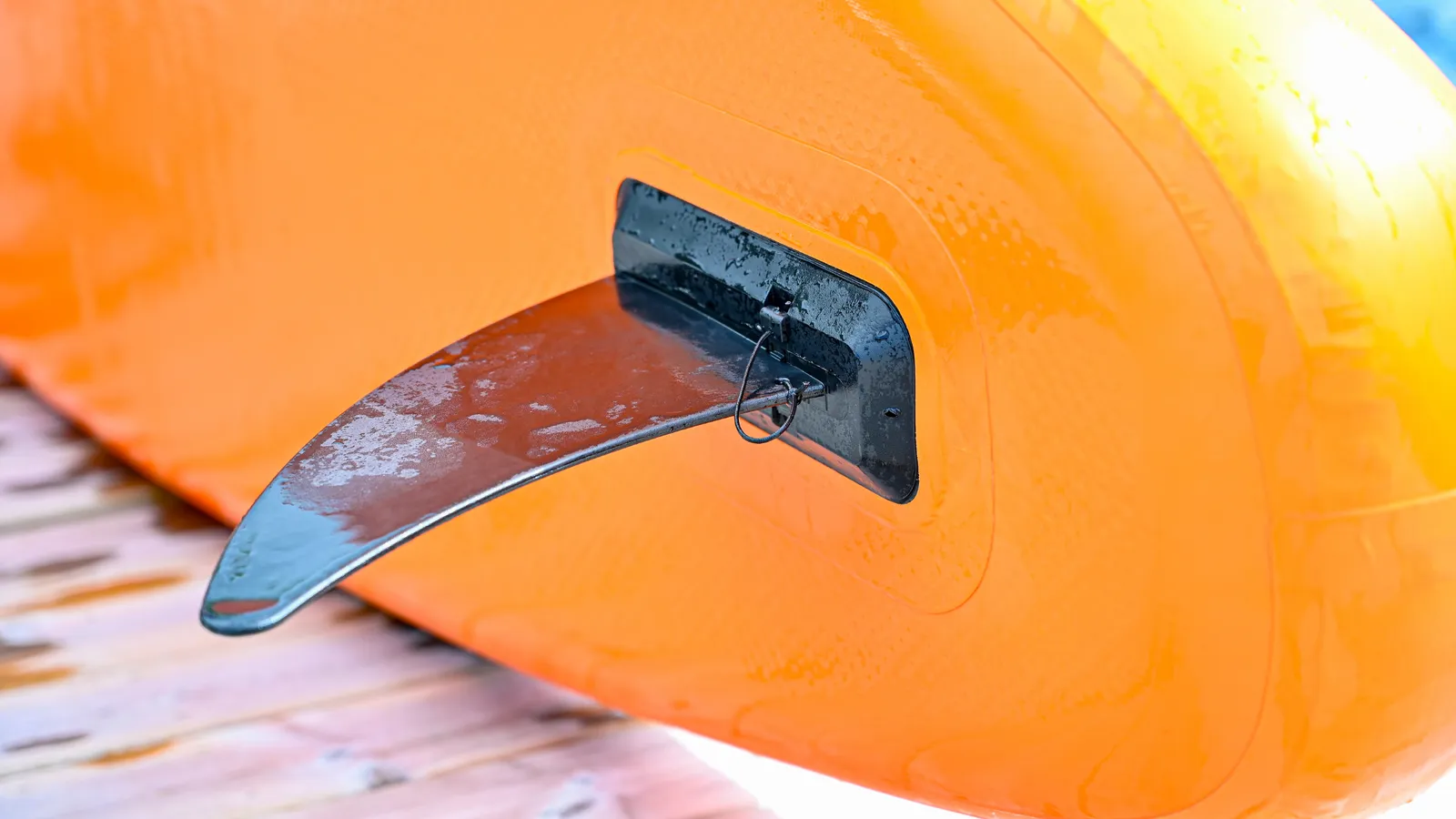
Fins keep the board going straight. Bigger fins track better; smaller fins turn more easily.
- Single fin: the classic flat-water setup. Little drag, good tracking.
- 2+1: a big center fin with two small side fins. Very common on all-round boards, and you can pull the center fin in shallow water.
- Thruster (three similar fins): for surfing, where you want grip on the wave.
- Inflatable fins: look for a removable center fin in a standard US box or a tool-free clip system. Soft fixed side fins are fine. Flimsy glued-on center fins are a sign of a cheap board.
The paddle
A heavy, flexy paddle makes every stroke harder. Look at:
- Shaft: aluminum is cheap and heavy; fiberglass is a good middle ground; carbon is lightest.
- Adjustability: adjustable paddles suit shared boards and travel. Check the clamp holds firmly.
- Length: for flat water, a common starting point is roughly 8–10″ taller than you.
What else you need
- Life jacket. On most US waters a paddle board counts as a vessel outside surf and swim zones, so the Coast Guard requires a USCG-approved life jacket for each person, plus a whistle and, after dark, a light. Under federal rules kids under 13 must wear one (some states set their own age). See do you need a life jacket on a paddle board.
- Leash. It keeps the board within reach after a fall. Coiled leashes suit flat water; straight leashes suit surfing. Don’t wear an ankle leash in moving rivers; use a quick-release waist leash there.
- Pump. Most inflatables come with a hand pump. An electric pump saves your energy for paddling.
- Bag and repair kit. Usually included with inflatables. Check what’s in the box before comparing prices.
FAQ
What’s the most important thing to look for in a paddle board?
The right size for your weight and how you’ll use it. A well-sized cheap board is more fun than a premium board that’s too small for you.
How much should I spend on a first paddle board?
Independent testers have rated some complete inflatable packages around $230–$600 at the time of writing as good first boards, and premium inflatables and hard boards run about $800–$1,500. Our guide to why paddle boards cost what they do explains where the money goes.
Is a wider paddle board always better for beginners?
Wider is more stable, up to a point. Past about 34–35″ for most adults, the board gets slow and you have to reach out to the side to paddle. Pick a width that suits your weight.
Should I buy a paddle board package?
For inflatables, usually yes. Packages normally include a pump, paddle, leash, fin and bag. Just check the paddle quality, since that’s where cheap packages save money.