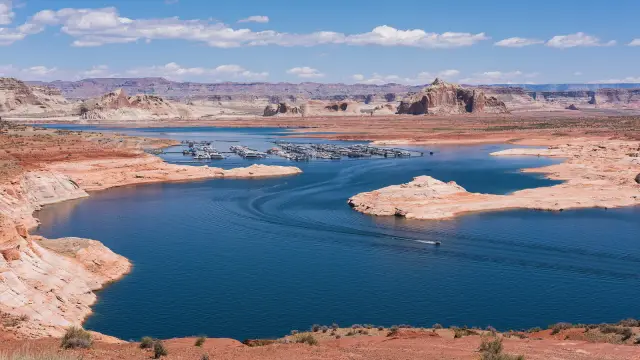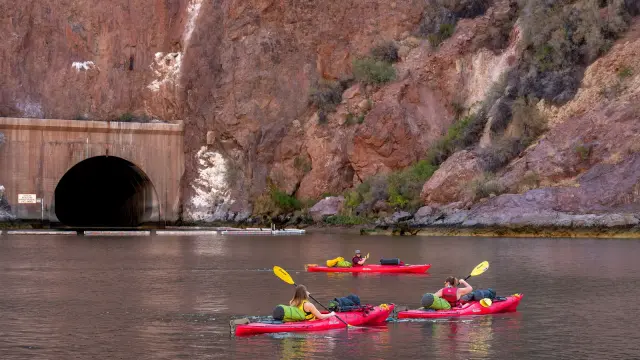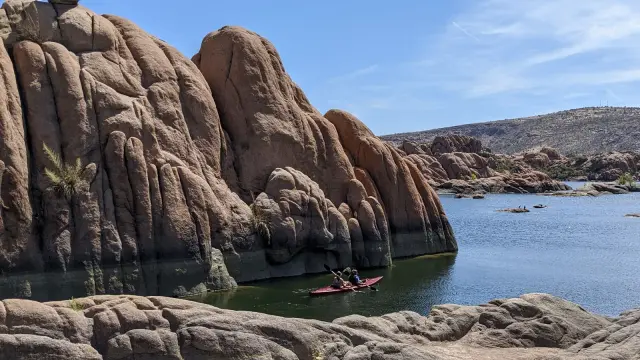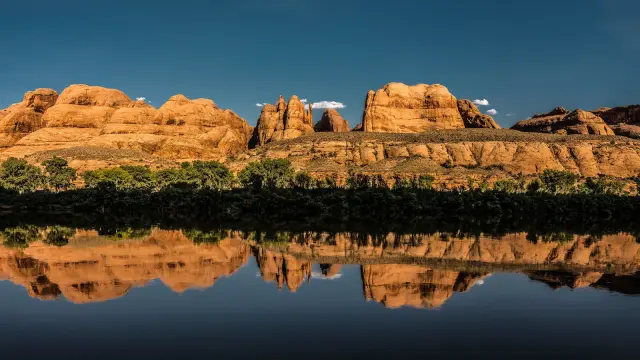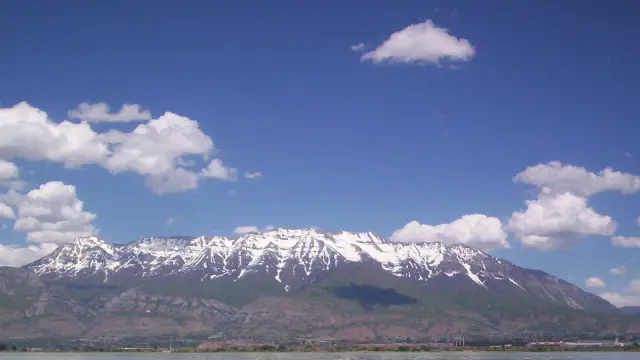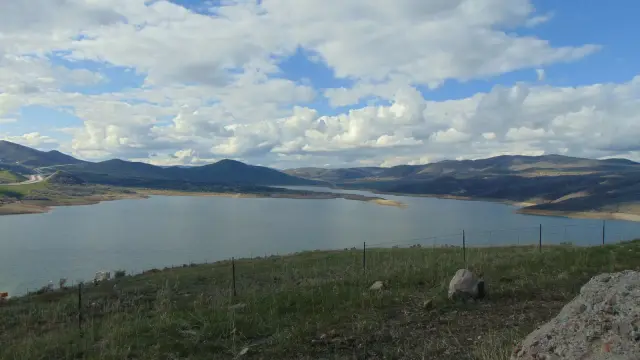
Sand Hollow Reservoir is the best place to paddle board near Zion National Park. It’s a big, warm reservoir surrounded by red sand and sandstone, under an hour’s drive from the park, with a board rental shop on the south shore. For a quieter, cooler paddle in summer, drive up to Kolob Reservoir, high on the Kolob Terrace above Zion.
You can’t really paddle board inside Zion itself. The Virgin River is shallow most of the year, and the park only allows boats on it with a wilderness permit, during brief spring snowmelt, in craft built for whitewater. The reservoirs around Hurricane and St. George are where people actually paddle. They have red rock views, long seasons, and state park facilities, and all of them are within about an hour of the park.
Quick answer
- First time on a board: Sand Hollow, launching from the south beach near the rental shop.
- Closest to Zion: Quail Creek Reservoir in Hurricane, the nearest of the big reservoirs to the park.
- Families with young kids: Fire Lake Park at Ivins Reservoir, a free city park with a small swimming beach and no boats.
- A quiet, scenic paddle: Gunlock Reservoir, northwest of St. George.
- Escaping the heat: Kolob Reservoir, above 8,000 feet, in summer only.
The best places to paddle board near Zion
Sand Hollow Reservoir
Directions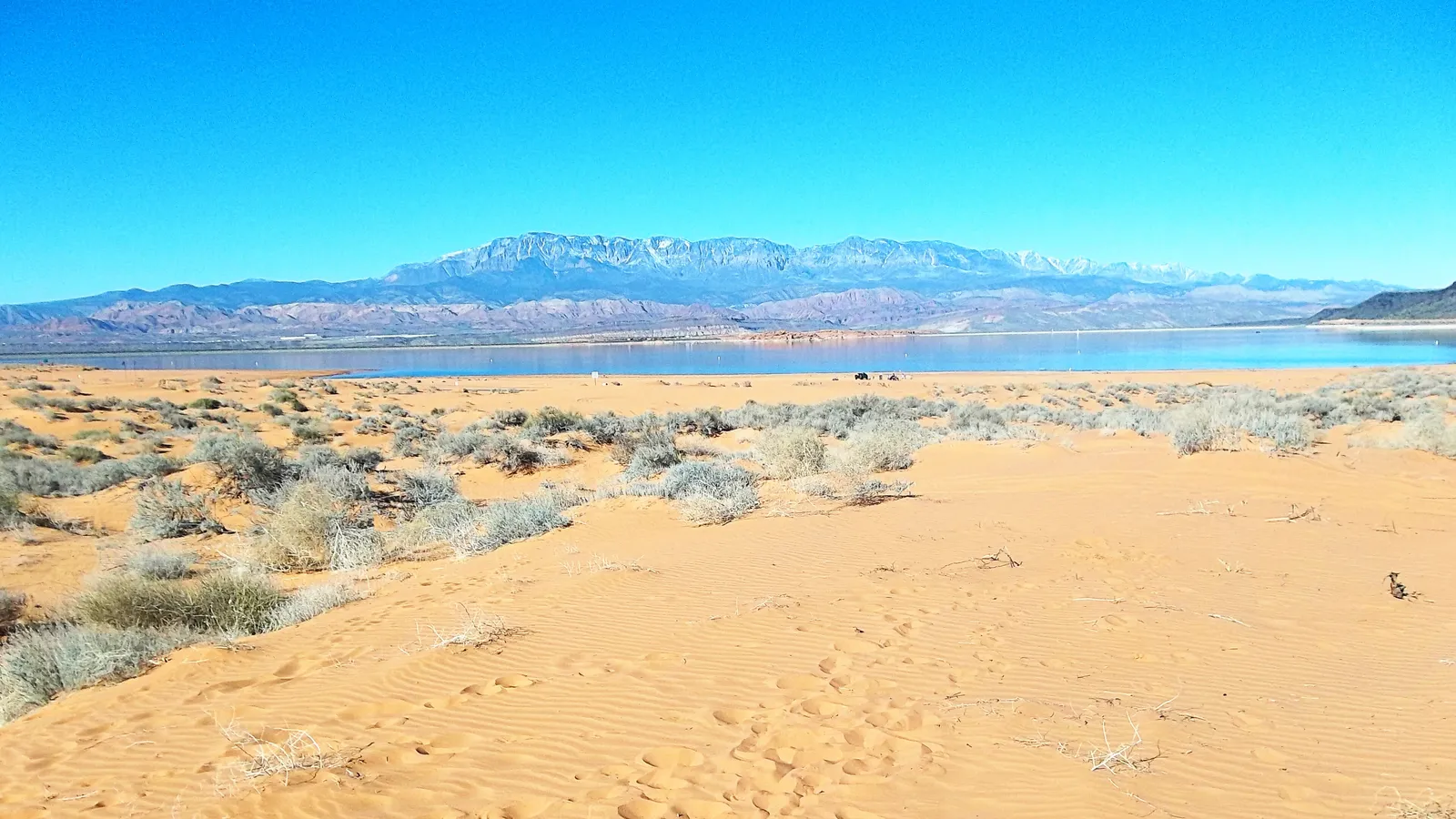
Best for: beginners, families and anyone who wants to rent a board. Flat water, with afternoon wind.
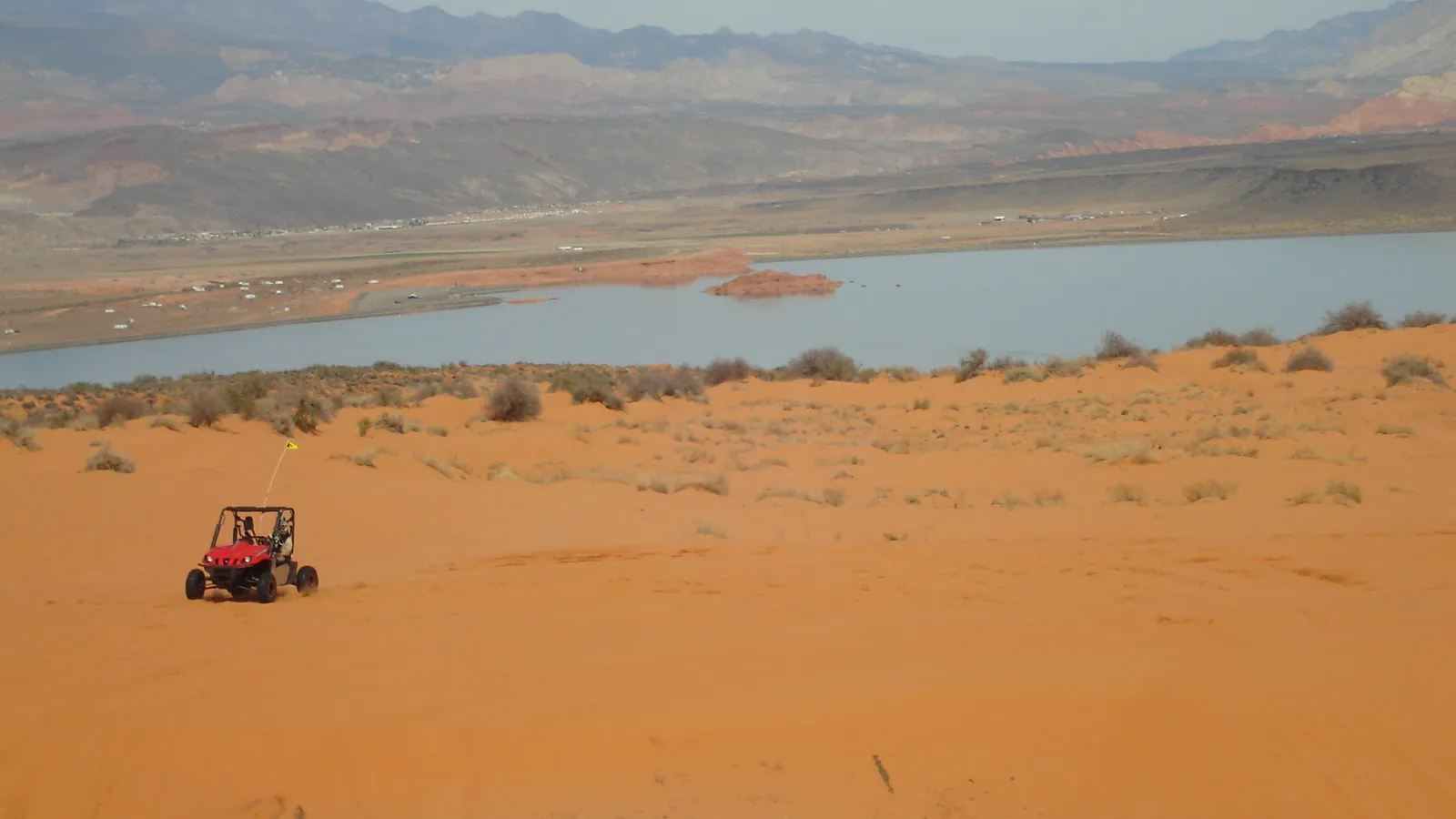
Sand Hollow State Park, near Hurricane, has a 1,322-acre reservoir ringed by red sand and sandstone. It’s popular for boating and jet skis as well as paddling, and the dunes next door are a big off-highway vehicle area.
Where to launch: The park has a main boat ramp with floating docks and a separate south boat ramp beside the rental shop. Paddlers tend to prefer the coves on the south and east sides, which are calmest in the morning. Day use is $25 per vehicle for Utah residents and $35 for non-residents at the time of writing. The park opens at 6 a.m. during daylight saving time and 7 a.m. in winter.
What to avoid: The open middle of the reservoir is where the powerboats and jet skis run. Stay near the shore, and head in if the wind picks up in the afternoon.
Rentals and lessons: Sand Hollow Rentals, the park’s concession at the south end, rents kayaks and paddle boards along with ATVs and UTVs. Check sandhollowrentals.com for prices and hours.
Good to know: Dogs are welcome but must be leashed at all times. Sand Hollow is also where boaters can get a decontamination done, which matters if you’ve paddled Lake Powell recently (see the rules section below).
Quail Creek Reservoir
Directions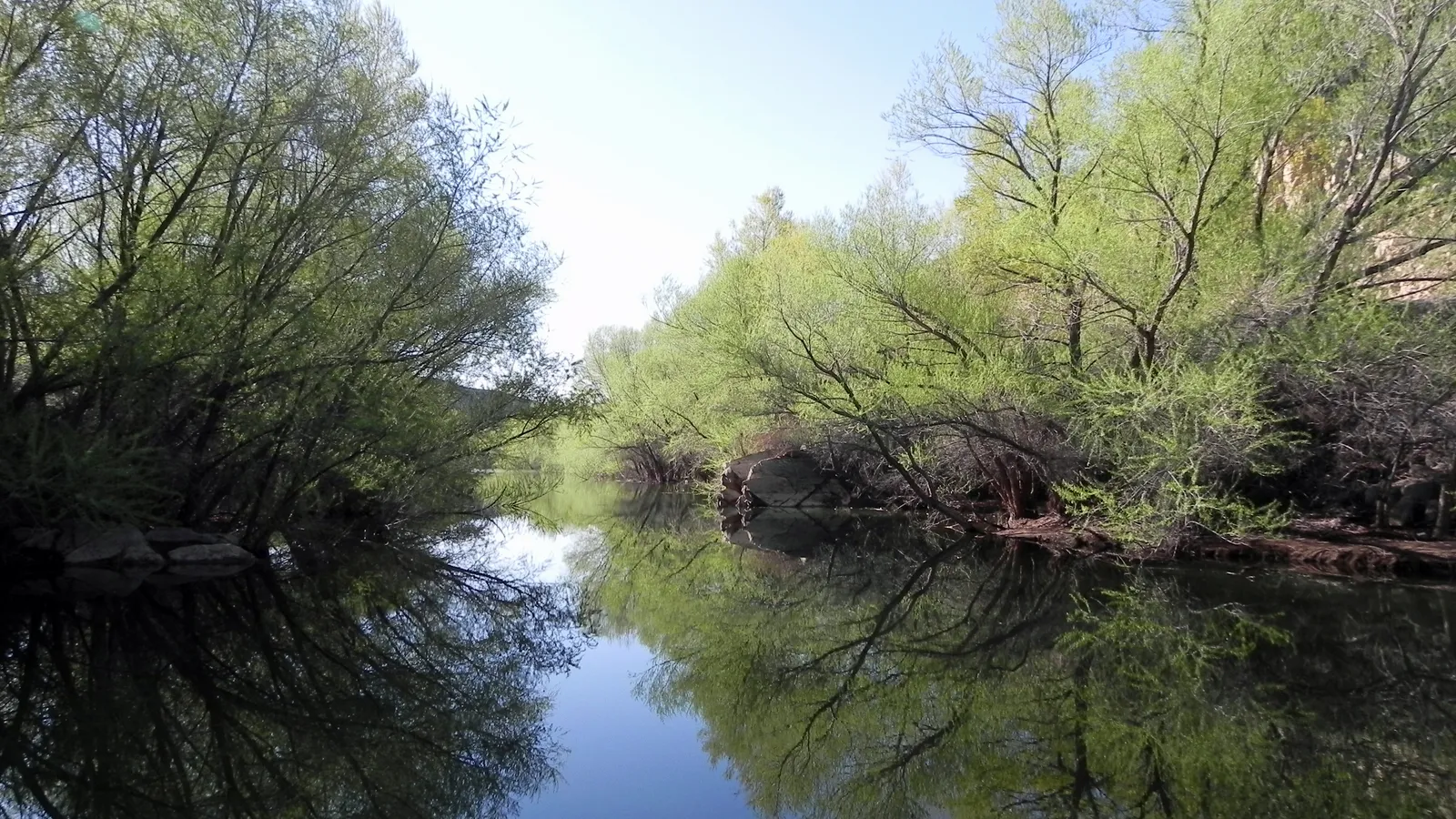
Best for: paddlers staying in Hurricane or on the way to Zion. Flat water.
Quail Creek State Park sits just off I-15 in Hurricane, the closest of the big reservoirs to Zion. Its 600-acre reservoir reaches 120 feet deep, and Utah State Parks says it has some of the warmest water in the state. The shoreline is rocky red sandstone, and the park has campsites, restrooms and a boat launch with floating docks.
Where to launch: Use the main day-use area by the boat ramp. Day use is around $15 per vehicle for Utah residents and $25 for non-residents at the time of writing. The park is open year-round, 6 a.m. to 9 p.m.
What to avoid: Stay clear of the boat ramp and the main boating lanes. On a busy summer weekend, boat wakes bounce off the canyon walls and make the water choppy.
Good to know: Utah State Parks asks visitors to check for harmful algae conditions before swimming or paddling. Look at the park’s current conditions page before you go.
Gunlock Reservoir
Directions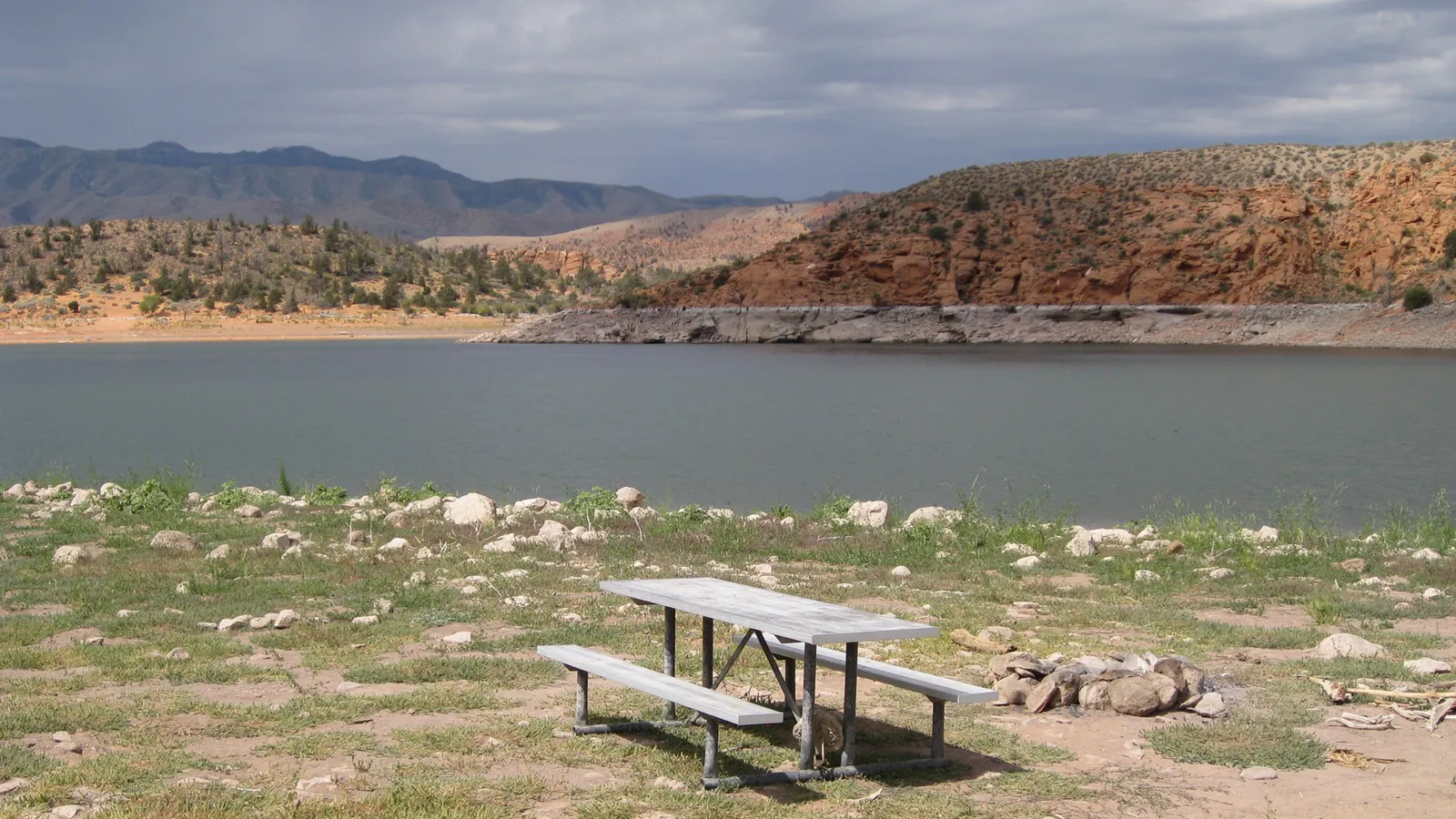
Best for: a quieter paddle with a scenic drive. Flat water.
Gunlock State Park is about 15 miles northwest of St. George, at 3,600 feet. The 266-acre reservoir sits on the Santa Clara River, surrounded by low red and grey hills. It’s smaller and usually quieter than Sand Hollow. In wet years, water spills over the rocks below the dam and forms the Gunlock waterfalls, a local attraction when they’re running.
Where to launch: The park has beach access and a boat ramp. The ramp is open 7 a.m. to 8 p.m. from May to September and 7 a.m. to 7 p.m. from October to April. Day use is $15 per vehicle for Utah residents and $25 for non-residents in 2026.
What to avoid: Stay off the rocks around the waterfalls. The park warns that they’re slick, that the water is swift and that the pools hide hazards. In October 2026, the park was also warning of floating debris in the reservoir, so keep a lookout.
Good to know: Gunlock can’t decontaminate boats on-site. If your board needs a decontamination, get it done at Sand Hollow or at the port of entry on I-15 south of St. George before you drive out.
Fire Lake Park at Ivins Reservoir
DirectionsBest for: families with young kids, a short paddle on calm water.
Ivins Reservoir, the county’s oldest reservoir, dates from 1918. Since 2016, part of it has been Fire Lake Park, a free city park in Ivins, next to Kayenta, run by the city with the Shivwits Band of Paiutes and the county water district. A levee separates a 4-acre swimming area, and the rest of the reservoir is open for paddling, with red rock views all around.
Where to launch: Park in the lot and carry your board to the water. There’s no entry fee.
What to avoid: No powerboats or jet skis are allowed on the Fire Lake side, so the main hazard is other paddlers and swimmers. Keep out of the swimming area.
Good to know: Dogs aren’t allowed in the park. Utah also bans motors of 10 horsepower or more on Ivins Reservoir, which keeps it quiet.
Kolob Reservoir
Directions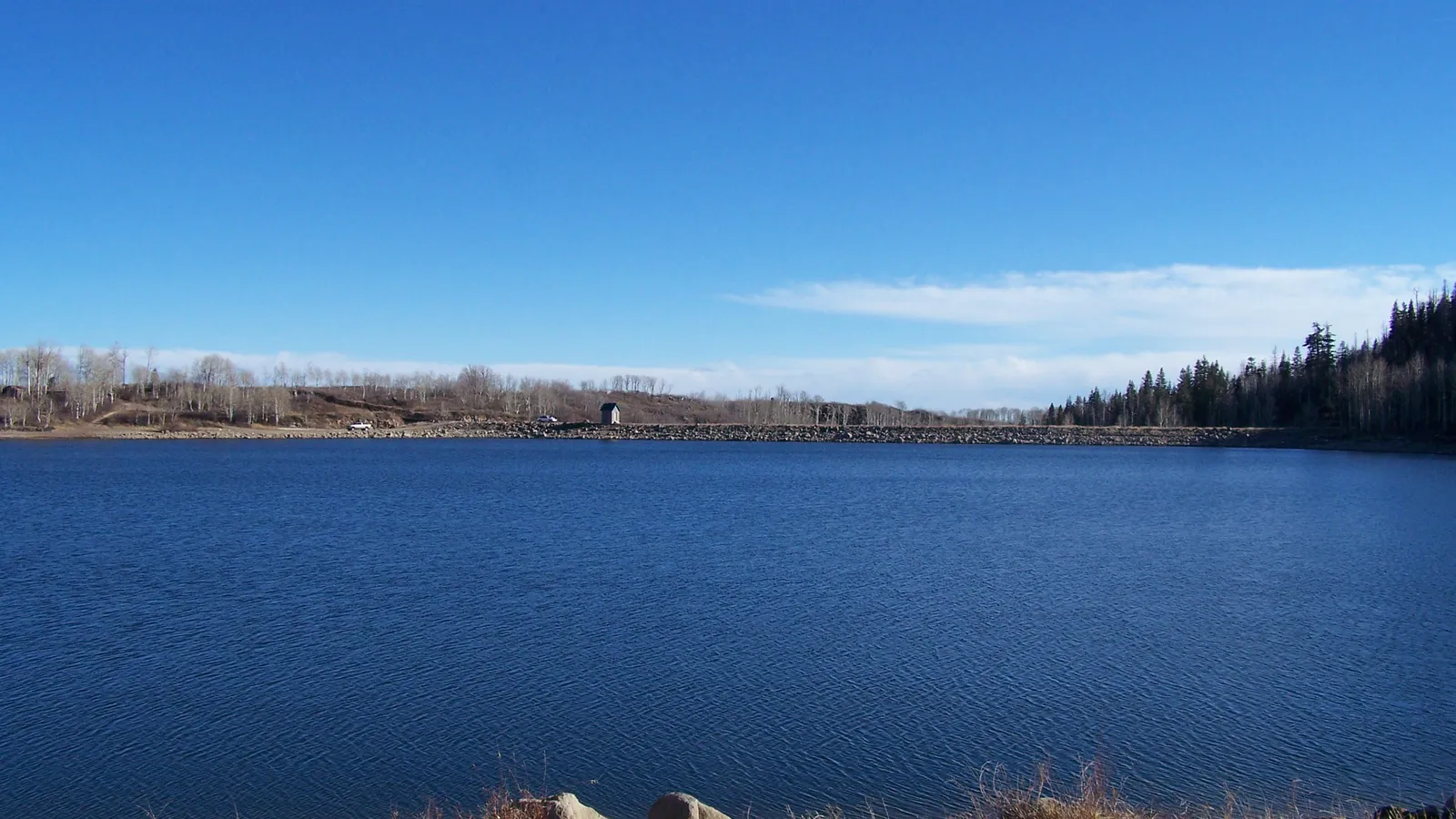
Best for: a cool summer paddle away from the crowds. Flat water, high elevation.
Kolob Reservoir sits on Kolob Mountain above 8,000 feet, among pines and meadows, owned and managed by the Washington County Water Conservancy District. It’s the only paddling spot on this list where summer days are comfortable rather than hot. The drive is part of the appeal: from the town of Virgin, Kolob Terrace Road climbs about 23 miles north, passing through part of Zion National Park.
Where to launch: Hand launch from the shore near the parking and toilets on the southeast side. Much of the shoreline beyond is fenced private grazing land, so stay on public access.
What to avoid: Kolob Terrace Road is steep and winding, and big RVs aren’t advised. Snow covers the roads from about December to May, so this is a summer and early fall trip only. Afternoon thunderstorms are common in the mountains in summer; get off the water at the first sound of thunder.
Good to know: Camping is only allowed in designated campsites, which you reserve from Memorial Day to the end of September. The water is much colder than the desert reservoirs, so dress for a fall in.
When to go
You can paddle the desert reservoirs around St. George most of the year, which is part of the appeal. Kolob is a summer-only trip.
- Spring (March–May): the best balance of warm air and fewer crowds. The water is still cool, so check our wetsuit check before you go.
- Summer (June–September): the warmest water and the busiest weekends. Desert afternoons get very hot, so paddle early, carry plenty of water and wear sun protection. This is the time for Kolob.
- Fall (October–November): quieter reservoirs, pleasant days and cooling water.
- Time of day: mornings are calmest at every reservoir. Wind usually builds in the afternoon, especially on the big open water at Sand Hollow.
Planning a longer paddle? Our Trip time calculator estimates how long a route will take at your pace.
Rules and safety near Zion
Utah treats a paddle board as a boat. According to Utah State Parks:
- Life jacket: carry a wearable US Coast Guard–approved life jacket for each person. Children 12 and under must wear one. See our pick of the best PFDs for SUP.
- Whistle: carry one. It’s the simplest way to call for help on a big reservoir.
Utah’s quagga mussel rules apply to paddle boards too:
- Take the mussel-aware boater course every year. Anyone who launches any watercraft in Utah, including paddle boards and kayaks, residents and visitors alike, must complete the Utah Division of Wildlife Resources’ free online course each year. It takes under 30 minutes. Print the certificate and keep it in your vehicle, or save it to the Utah DWR app.
- Clean, drain and dry your board, fins and leash every time you leave a lake.
- Been on Lake Powell? Lake Powell is the only water in Utah with confirmed quagga mussels, and watercraft leaving it face extra drying times or decontamination before they can launch elsewhere. Gunlock asks every boater to self-certify before launching. Heading there? See our guide to where to paddle board at Lake Powell.
Local rules and habits:
- Pay the day-use fee at the state parks (Sand Hollow, Quail Creek and Gunlock).
- Stay out of swim areas and boat lanes.
- Wear a leash on the big reservoirs, where afternoon wind can push a loose board away fast.
FAQ
Can you paddle board in Zion National Park?
Not in any practical sense. The park requires a wilderness permit for any watercraft on the Virgin River, issues permits only when the river runs above 150 cubic feet per second (usually briefly, during spring snowmelt), and expects craft designed for whitewater. Inner tubes aren’t allowed at any time. Paddle the reservoirs outside the park instead.
Where can beginners paddle board near Zion?
Sand Hollow is the easiest: rent a board on the south shore, and stay in the calm coves in the morning. Fire Lake Park in Ivins is a good, free alternative with no boat traffic.
Do I need a permit to paddle board near St. George?
You don’t register a paddle board in Utah, but you must complete the free, annual mussel-aware boater course and carry proof. You’ll also pay day-use fees at the state parks.
Can I bring my dog paddle boarding near Zion?
At Sand Hollow, yes, on a leash. Dogs aren’t allowed at Fire Lake Park. Read how to paddle board with a dog first, and remember that sand and rock get very hot in summer.
Is there anywhere else to paddle in southern Utah?
Lake Powell is the big one, a few hours’ drive east. If you’re heading north, see our guide to where to paddle board in Moab, or to Las Vegas if you’re driving south. Not sure what board you need? Our Board Fitter suggests a size for your weight and the water you’ll paddle.