The most useful beginner tips are simple: paddle on calm, shallow water, wear a life jacket and a leash, start on your knees, and look at the horizon instead of your feet. The rest of the list below builds on those.
Each tip is short, so you can skim it and keep it in your head at the launch.
Quick answer
- Water: flat, calm and shallow, with little wind and few boats.
- Safety: PFD, leash, and a plan someone else knows.
- Balance: kneel first, stand slowly, knees bent, eyes up.
- Paddling: vertical shaft, full blade in the water, power from your core.
- Falling: it will happen. Practice it, and practice getting back on.
Before you go
1. Pick a stable board
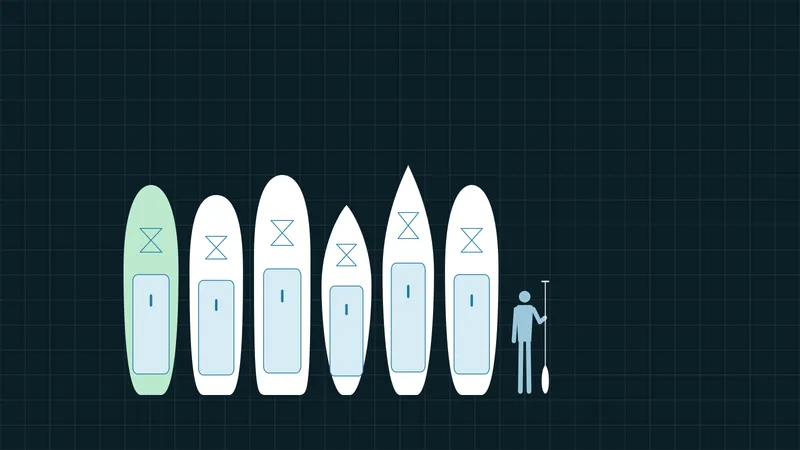
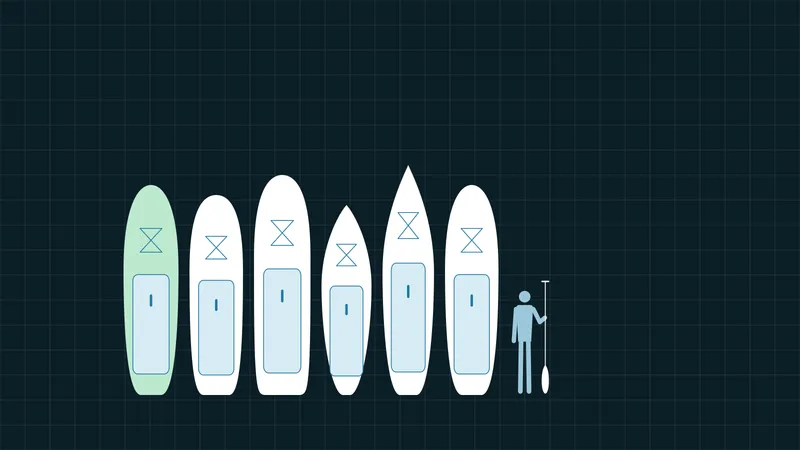
Wider and longer boards are steadier. Thurso Surf’s advice is to go wider and thicker when you’re unsure. Our Board Fitter narrows it down by your weight, height and how you’ll paddle, and what size paddle board do I need explains the numbers.
2. Consider an inflatable
Inflatables are easier to store and carry, which is why many beginners start with one. The trade-off is that you have to pump it up every time.
3. Size your paddle to your height
Thurso suggests a paddle about 6–10 inches taller than you, and Camping World says 8–10 inches. Adjustable paddles make this easy. More in how to hold a paddle board paddle.
4. Wear a life jacket
Wear a properly fitting PFD even if you’re a strong swimmer. The Coast Guard treats stand-up paddle boards as vessels outside designated swimming and surf areas, so a US Coast Guard-approved life jacket has to be on board, and children need to wear one. Rules differ by state, so check yours. See should I wear a life jacket paddle boarding and the best PFDs for SUP.
5. Wear a leash
Your board is your flotation if you get tired, and it drifts faster than you can swim. A leash keeps it attached. Camping World notes leashes matter most in the ocean. Check the leash and PFD before every session.
6. Carry a whistle
The US Coast Guard’s federal requirements list a sound-producing device, such as a whistle, as required equipment on recreational vessels, and that includes paddle boards. Clip one to your PFD.
7. Check the forecast every time
Look at wind and storms before each trip. Beginners should avoid strong wind, large boat wakes and surf. See what are the best conditions for paddle boarding.
8. Choose a gentle launch spot
A sandy beach or shallow edge where you can wade in is ideal. Walk out to about knee depth before getting on, so the fin doesn’t hit the bottom.
9. Tell someone your plan
Let a friend know where you’re going and when you expect to be back.
10. Dress for the water, not just the air
Wear something you can move in, such as a swimsuit or quick-dry clothes. If the water is cold, dress for falling in. Our wetsuit check and what to wear while paddleboarding help.
11. Protect yourself from the sun
Water reflects UV light. Use plenty of sunscreen, reapply it, and add sunglasses, a hat or a sun shirt.
12. Pack a small dry bag
Keep your phone, keys, water and a snack in a dry bag clipped to the board. A phone in a waterproof pouch also helps if you need to call for help.
On the board
13. Check which end is the front
Many beginner boards look similar at both ends. The fins go at the back.
14. Start on your knees
Kneeling near the center handle keeps your weight low while you get a feel for the board. Some paddlers sit first and paddle from their knees for a while, and that is fine.
15. Stand up slowly
From your knees, put your hands on the board, bring one foot up, then the other, to where your knees were. Raise your chest, then straighten your legs. Don’t rush it.
16. Stand in the middle with your feet apart
Place your feet hip- to shoulder-width apart on either side of the center handle, parallel to the board’s centerline.
17. Keep your knees soft
Slightly bent knees let you absorb wobbles. Stiff legs make you tip.
18. Look at the horizon
Looking down at your feet throws your balance off. Keep your chin up and look ahead, which also lets you spot hazards. More on this in how to improve balance for paddle boarding.
Paddling
19. Hold the paddle the right way round
The blade angles forward, away from you. One hand on the T-grip, the other on the shaft, about shoulder-width apart.
20. Use your core, not just your arms
Rotate your torso, plant the whole blade, then pull. Arms alone tire quickly.
21. Keep the shaft vertical and stroke short
Pull from near your toes back toward your feet. If the board keeps turning, see how to paddle a SUP straight.
22. Switch sides
Take a few strokes on one side, then change. This keeps the board on course and your muscles even.
23. Learn to turn
A big sweeping stroke on one side turns you the other way: a stroke on the right turns you left. Put the blade further back for a sharper turn.
Falling, and learning
24. Practice falling
Fall away from the board and into the water, and hold on to your paddle if you can. Practice in calm, shallow water. To climb back on, swim to the middle, grab the handle, kick and pull your chest onto the board. Our guide on getting back on after falling has the full steps.
25. Keep early trips short
Campspot suggests an hour at most for a first trip. Camping World says to go only half the distance you think you can, then turn around. Short, frequent sessions build skill and stamina faster than one long day.
FAQ
How long does it take to learn to paddle board?
Most people can stand and paddle in a calm spot within their first session or two. Balance and straight tracking improve with regular short sessions.
Should I kneel or stand on my first go?
Start on your knees, then stand once you feel steady. It’s the order every source we read recommends.
Do I need a leash and life jacket?
Yes to both for a beginner. The leash keeps the board with you, and the PFD keeps you afloat. State and local rules vary, so check them for where you paddle.
What’s the best water for a beginner?
Flat, shallow, sheltered water with little wind and boat traffic: a small lake or calm bay.
What should I buy first?
A stable board that fits your size, an adjustable paddle, a leash and a PFD. Try the Board Fitter to start.